Après le bruit | After the noise, 2024
Installation visuelle, poème et déambulation musicale dans l’espace public, Lausanne (CH), Chromonastiri (GR)Visual installation and musical walk in public space, Lausanne (CH), Chromonastiri (GR)
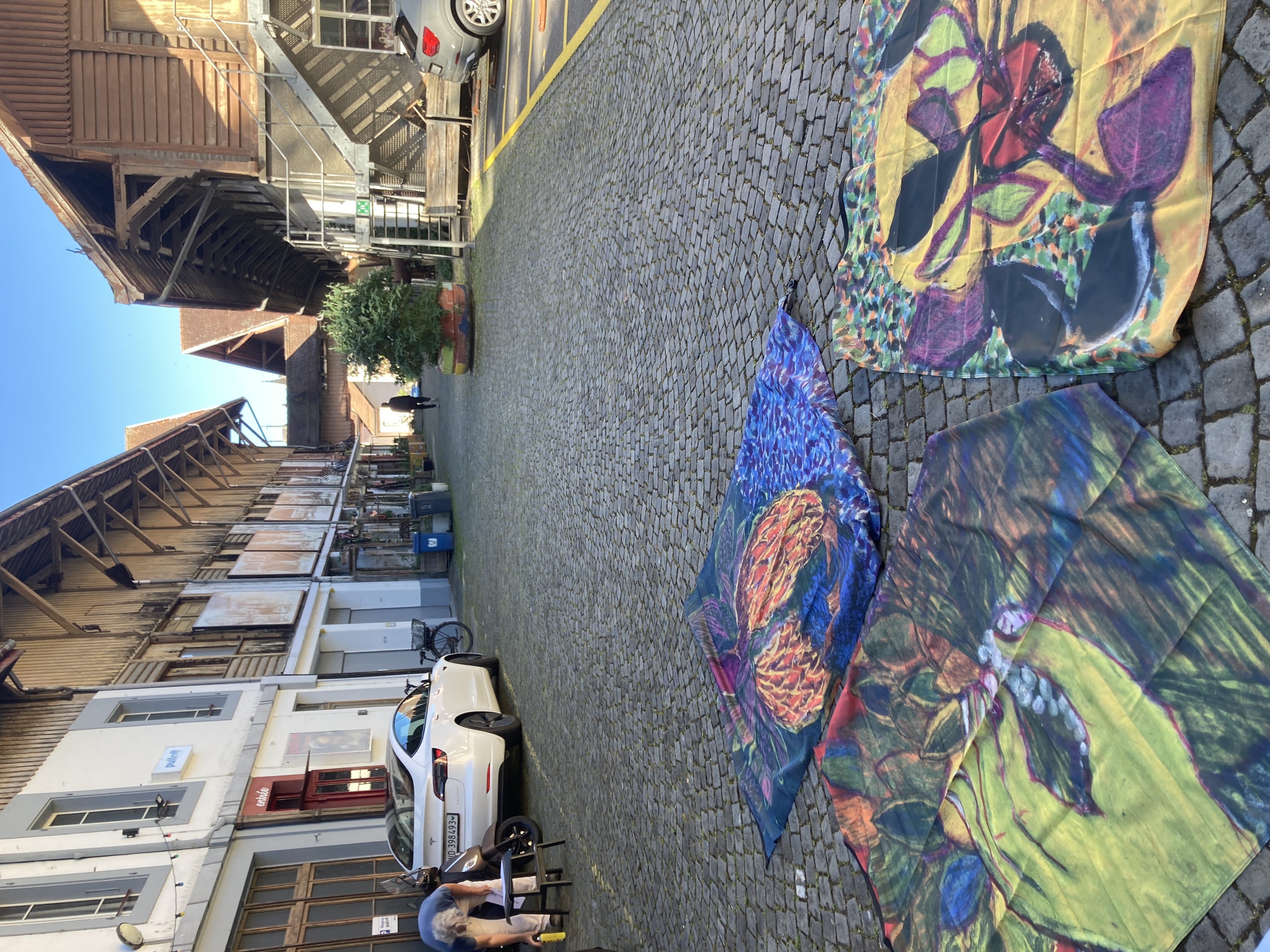
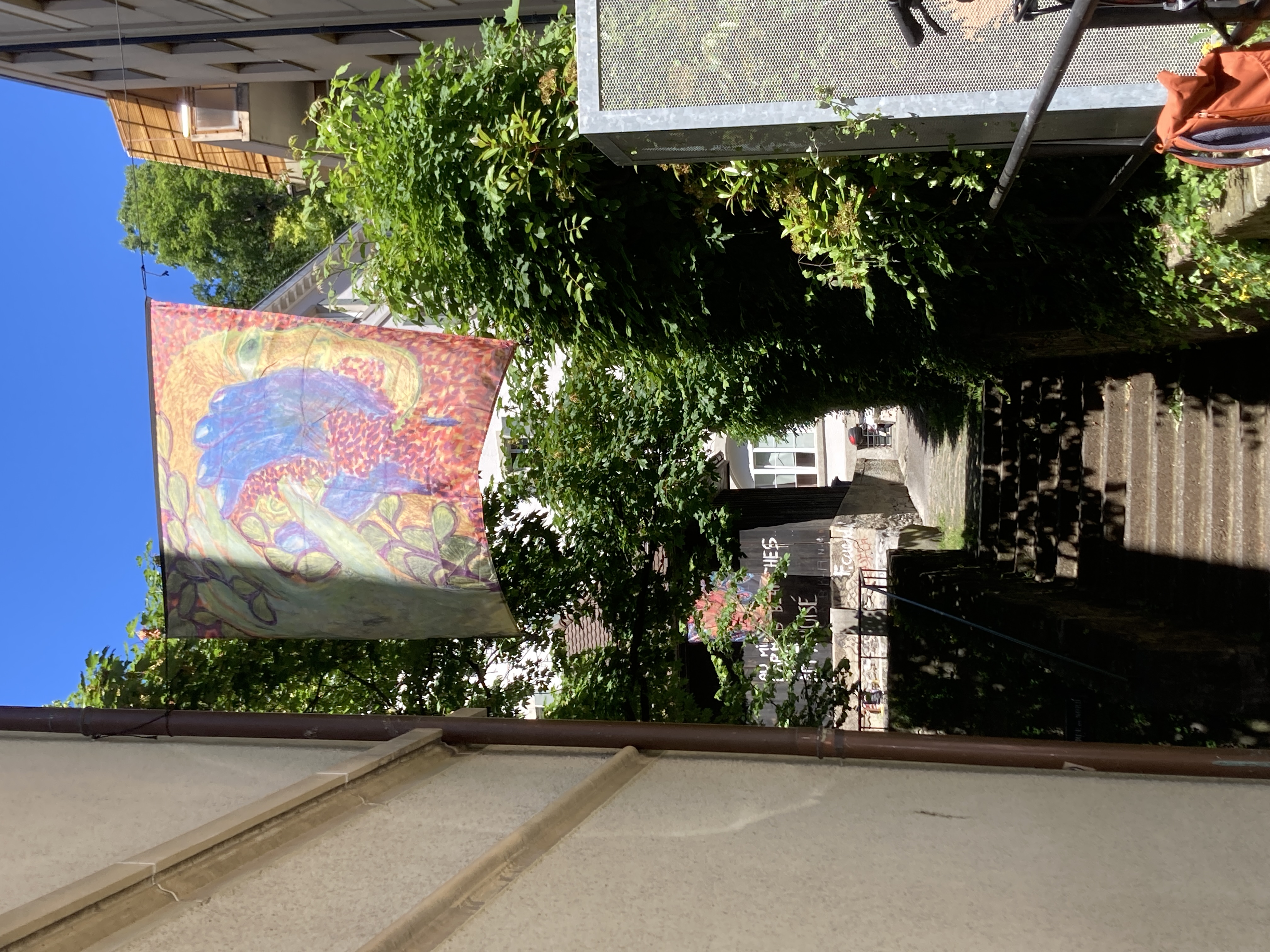
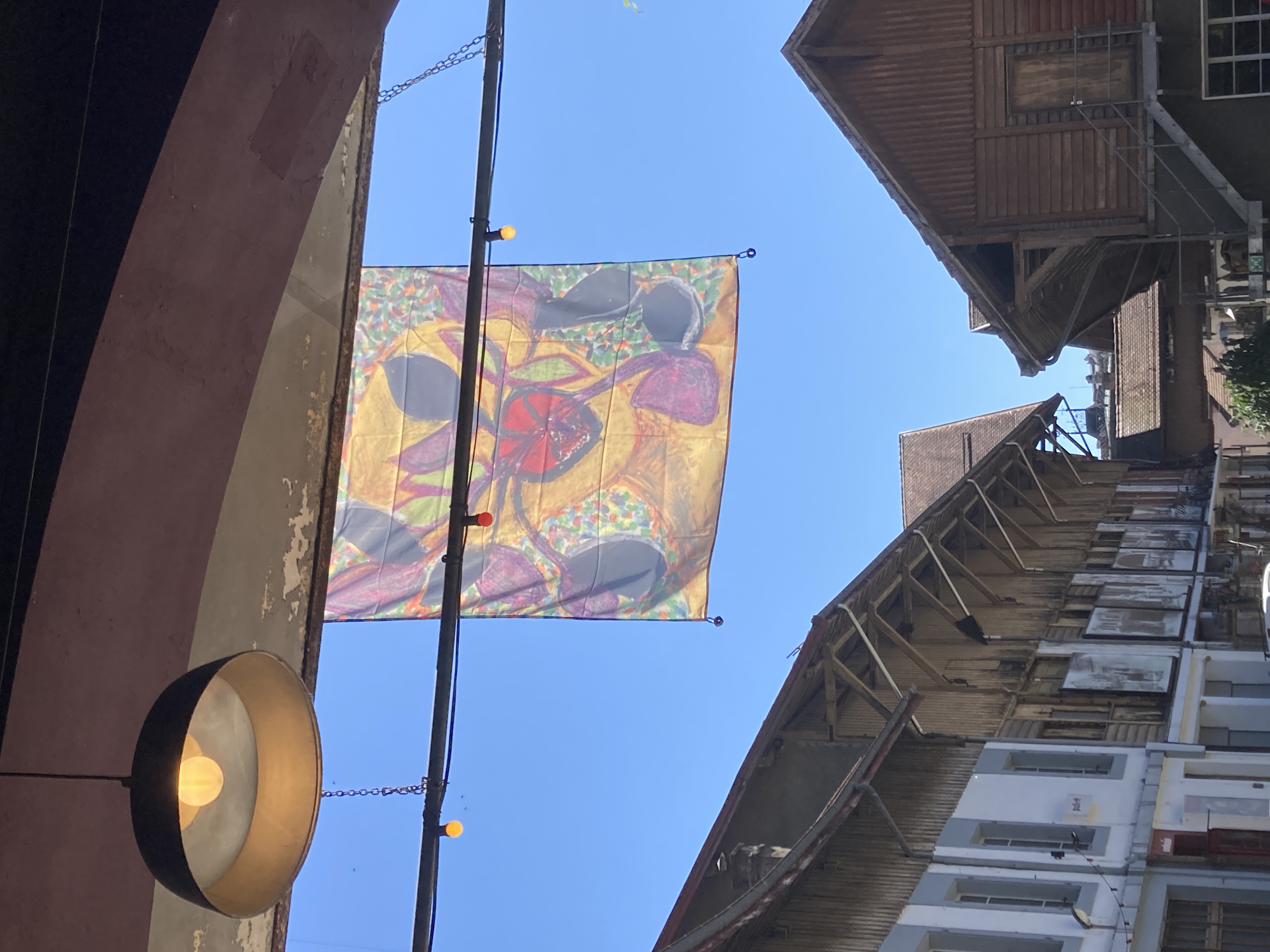
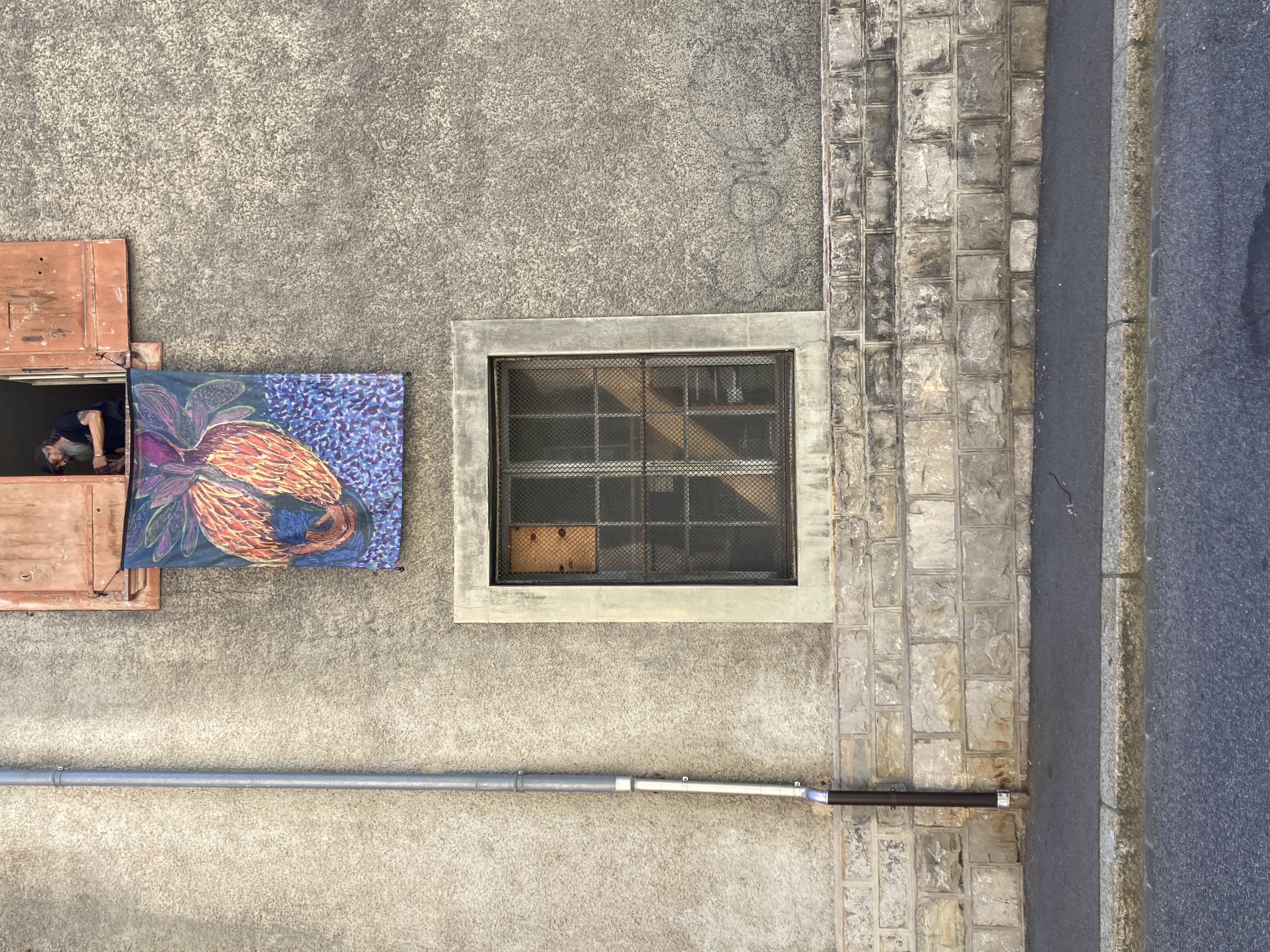
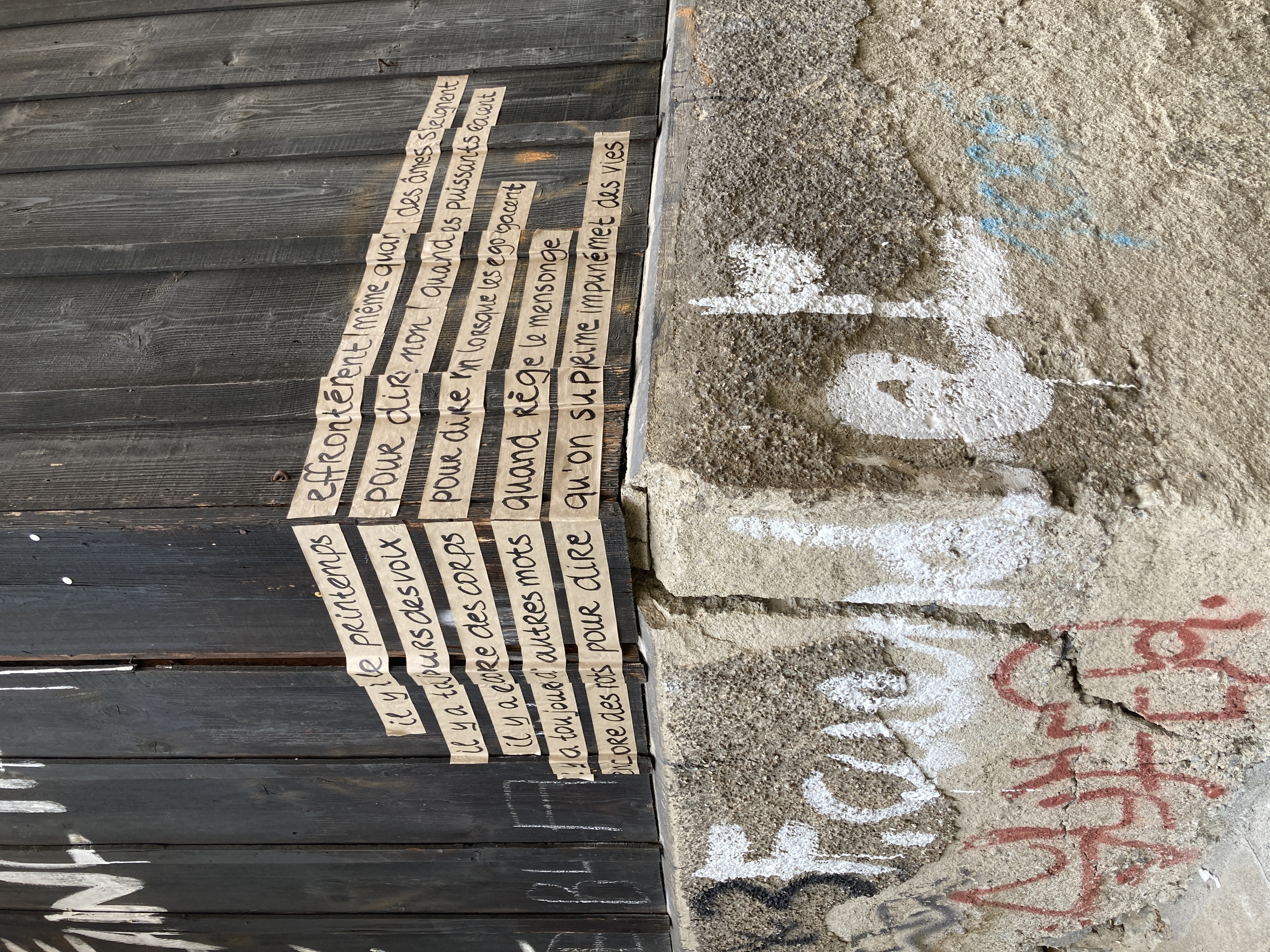
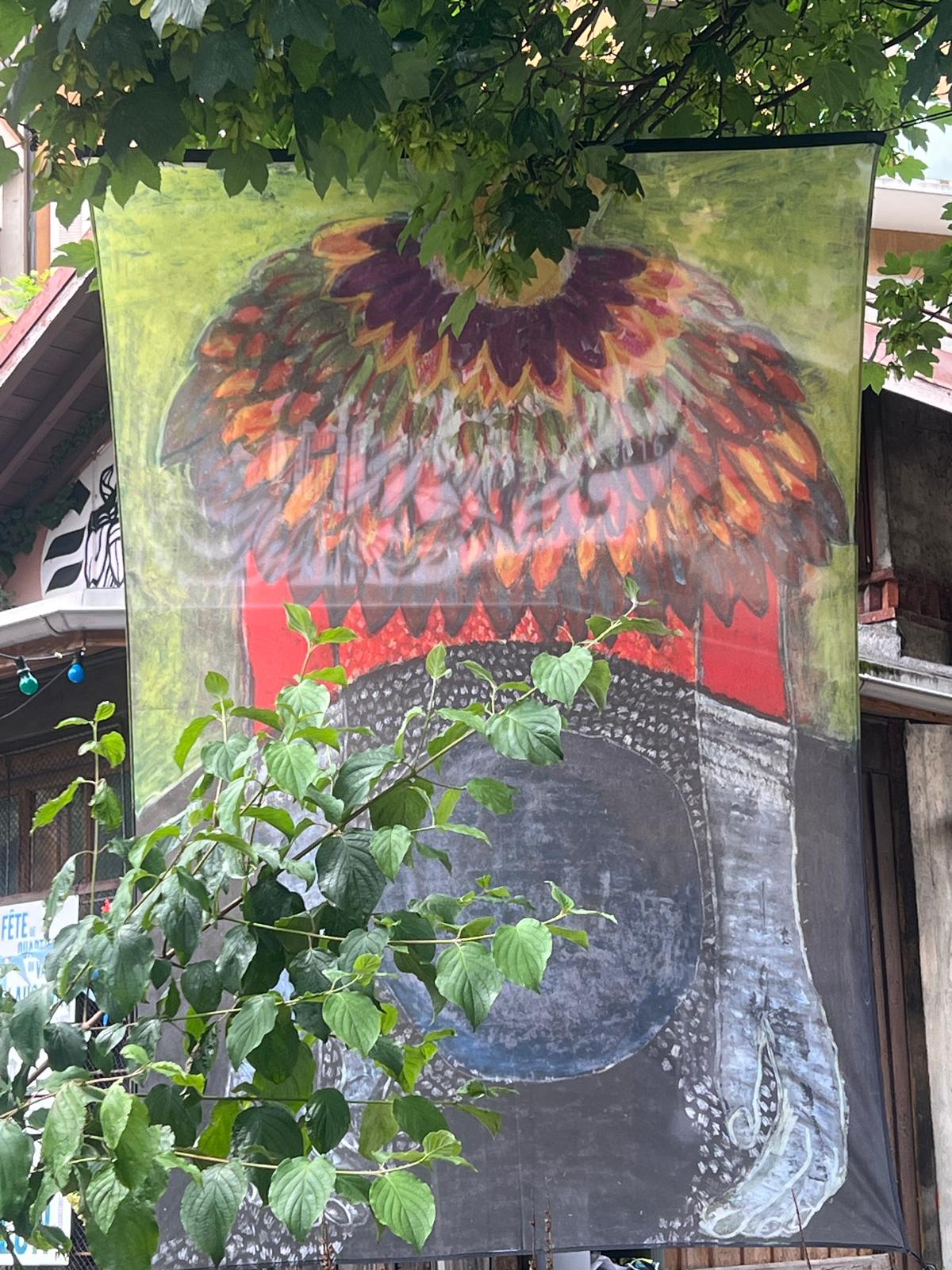

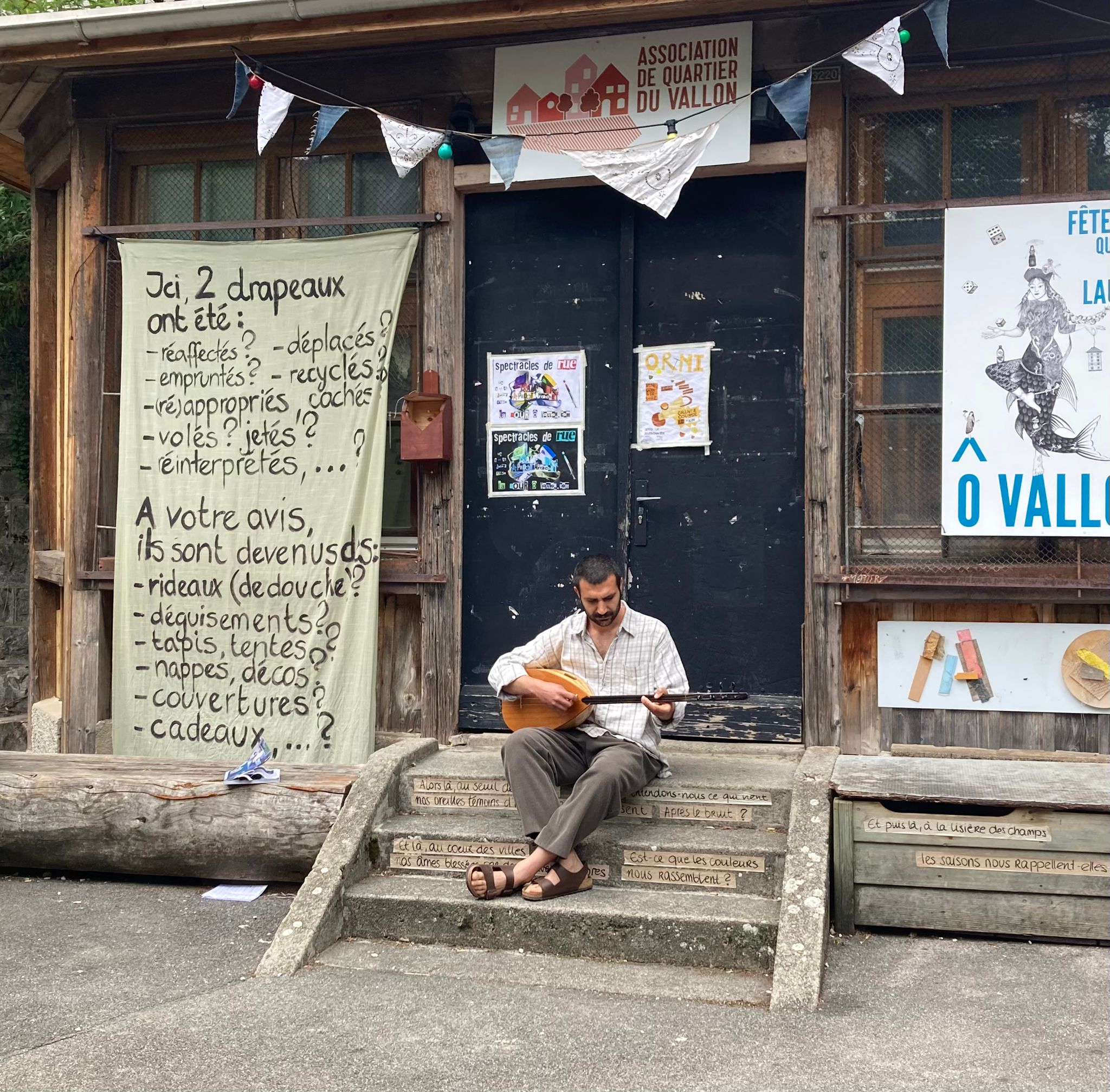

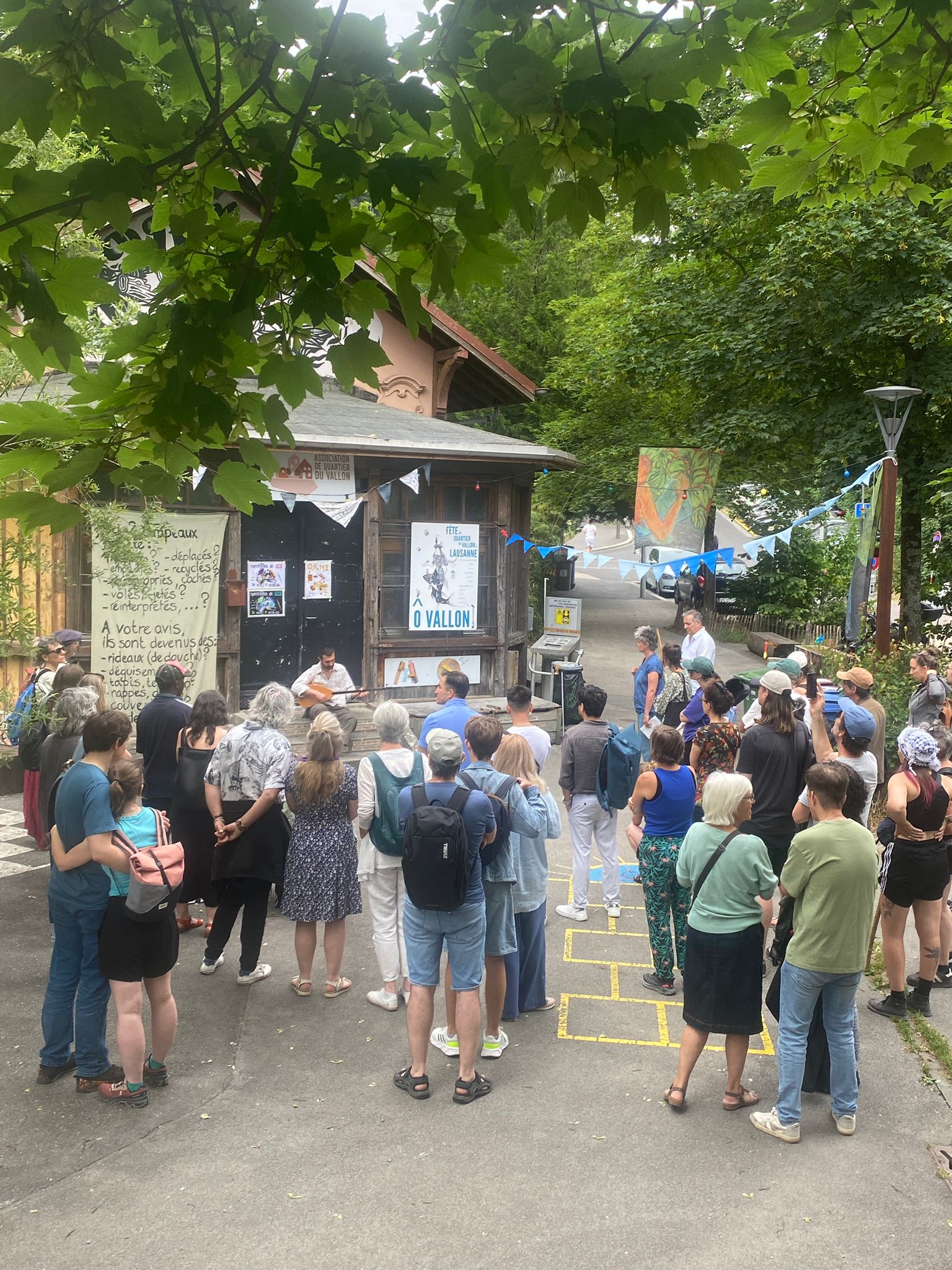
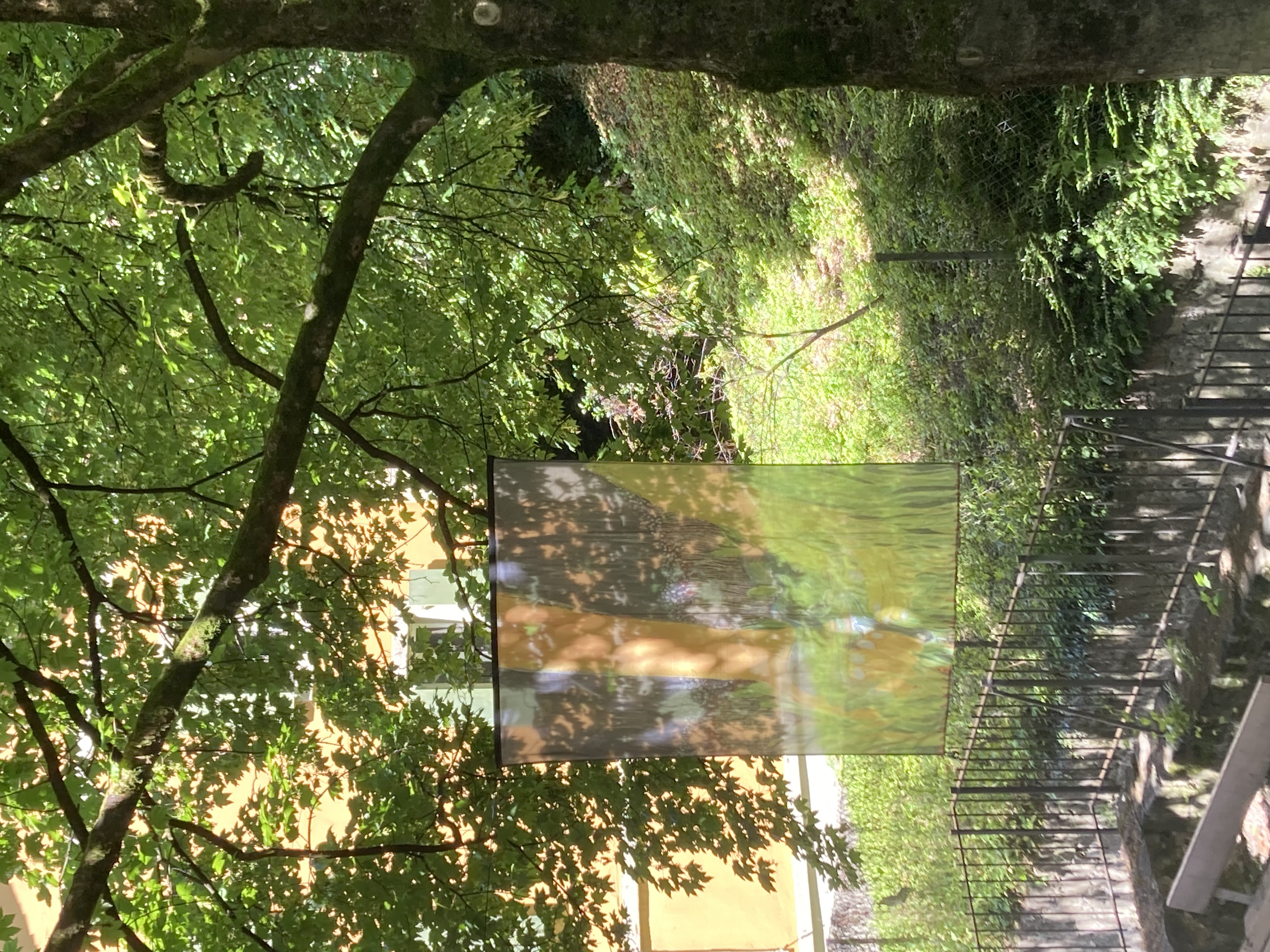
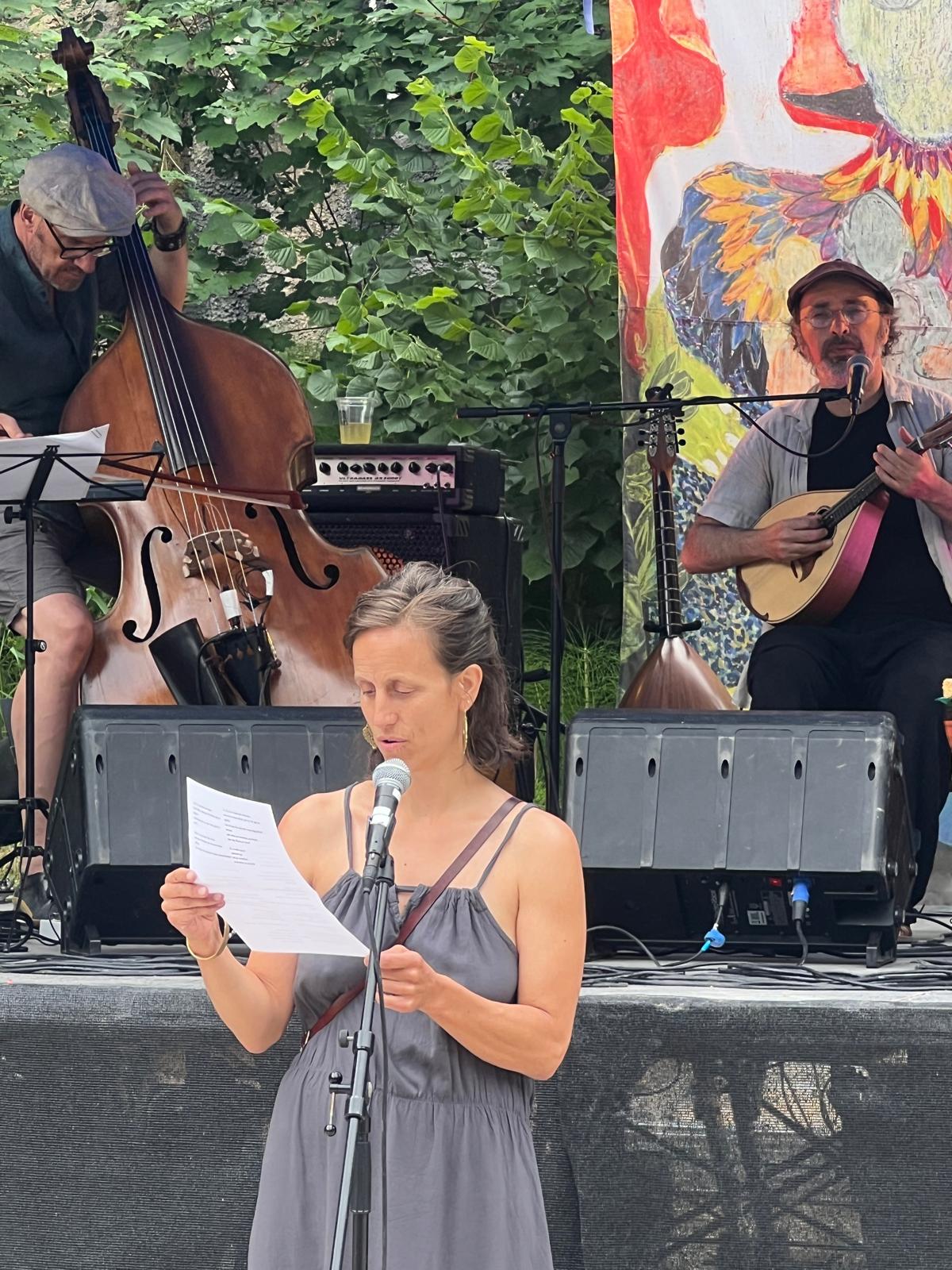
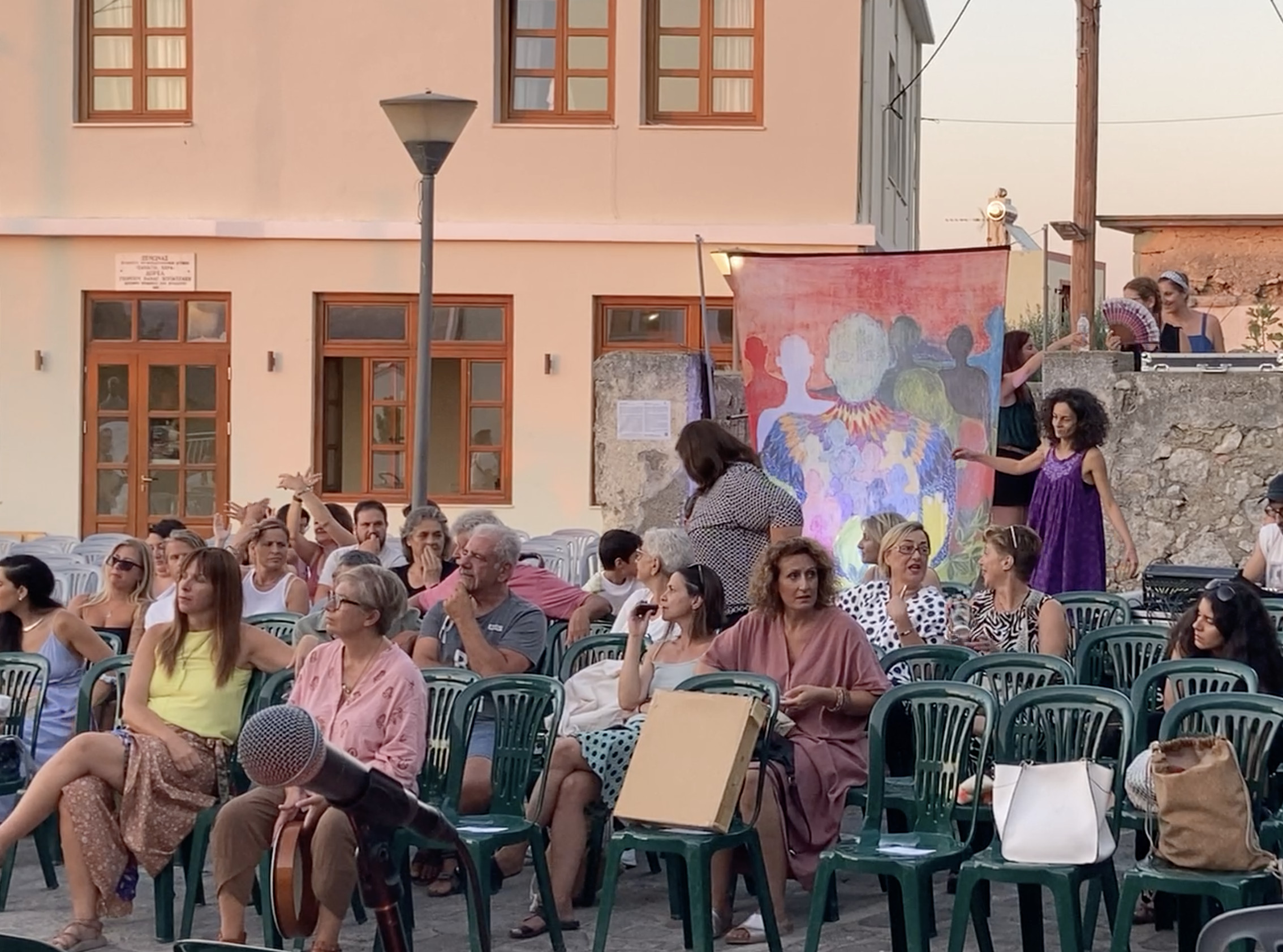

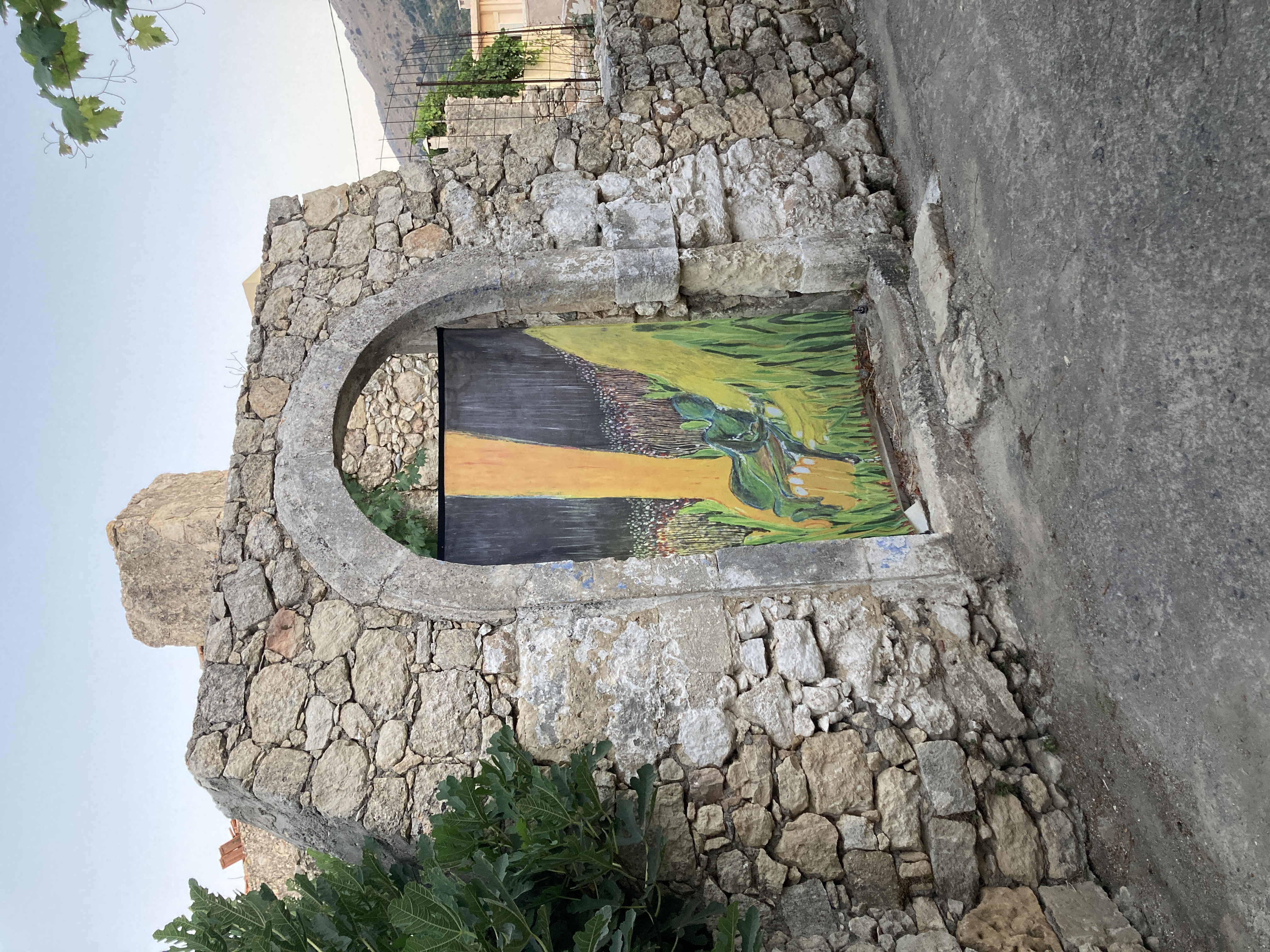

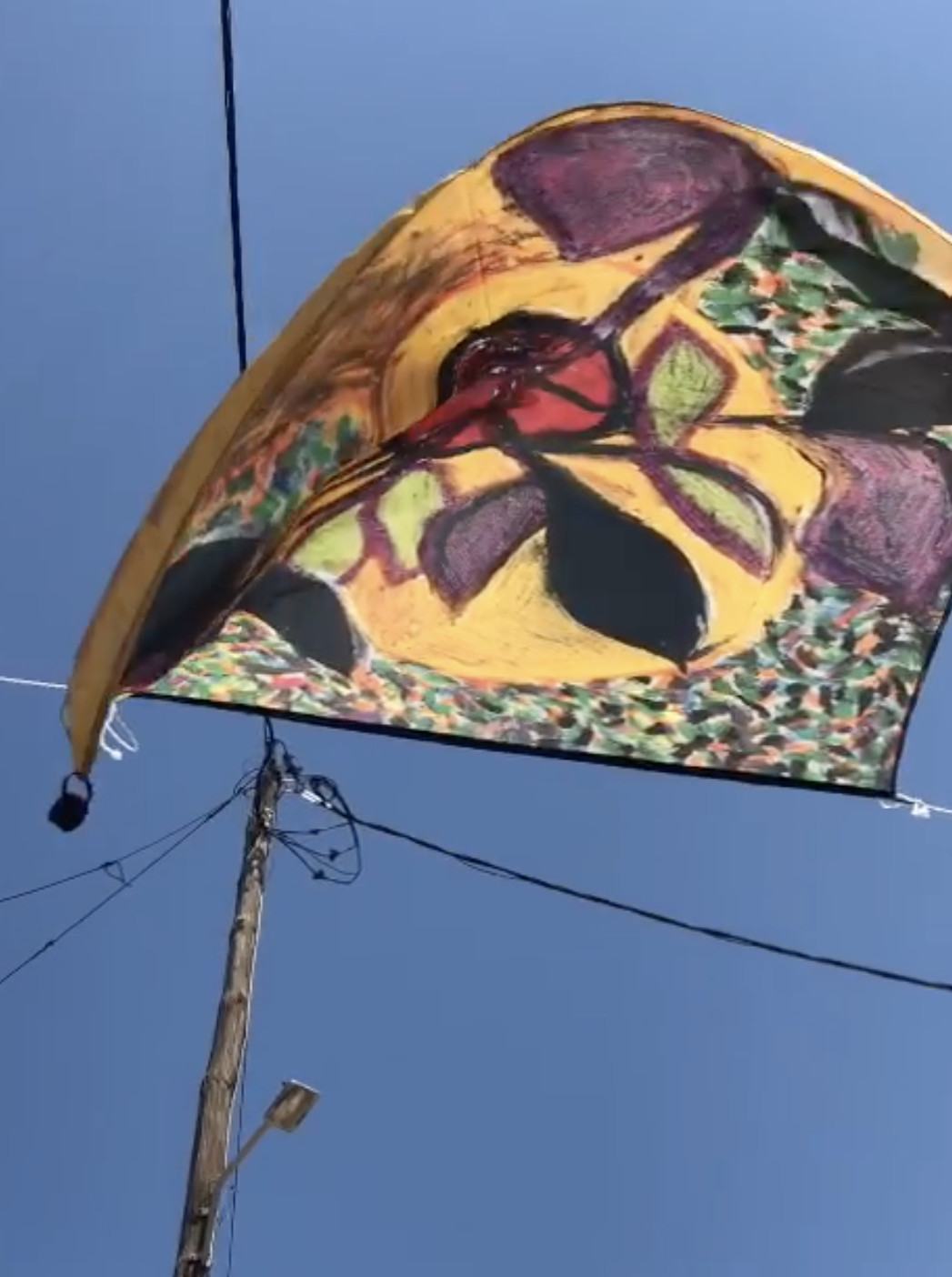

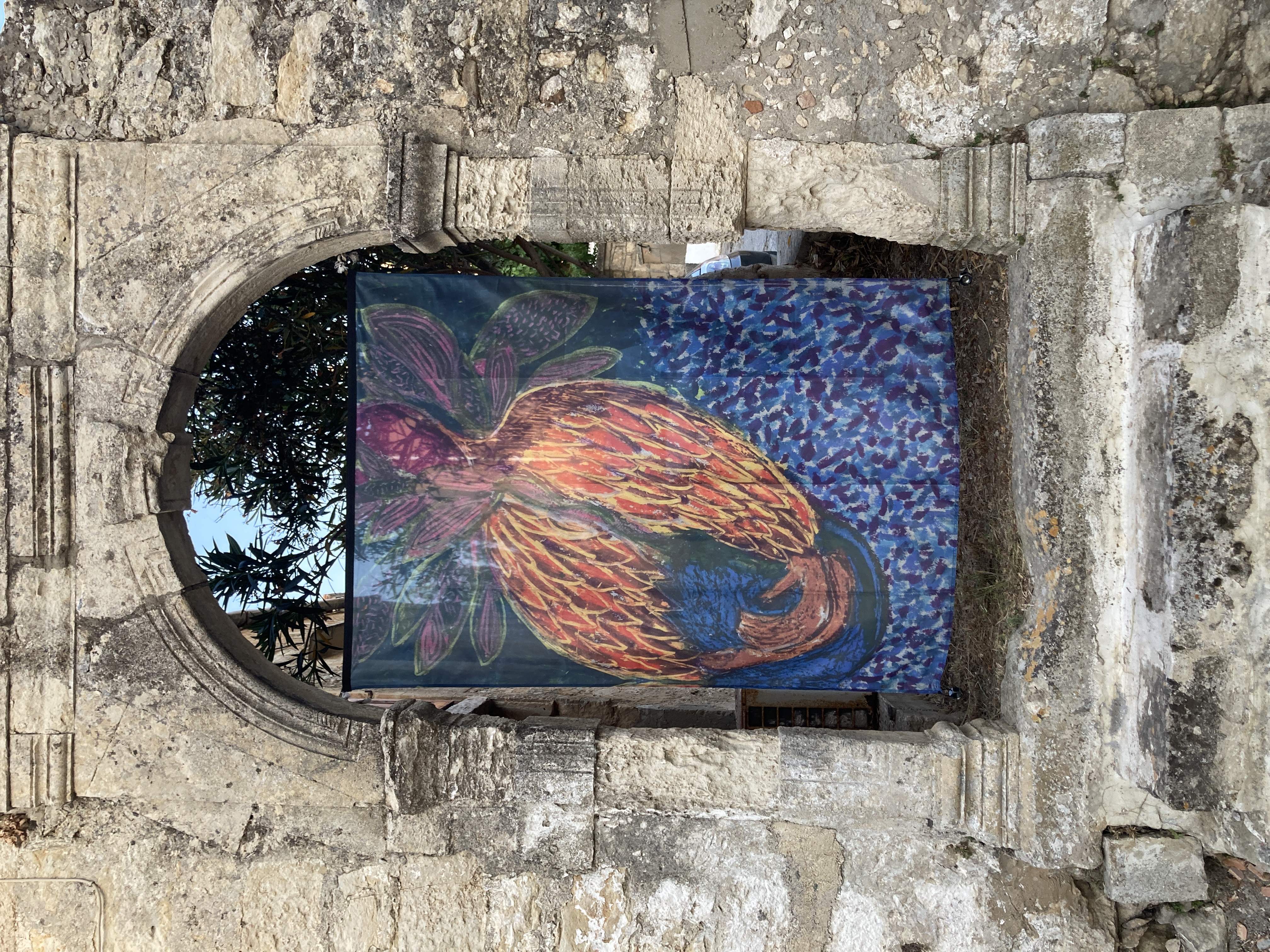


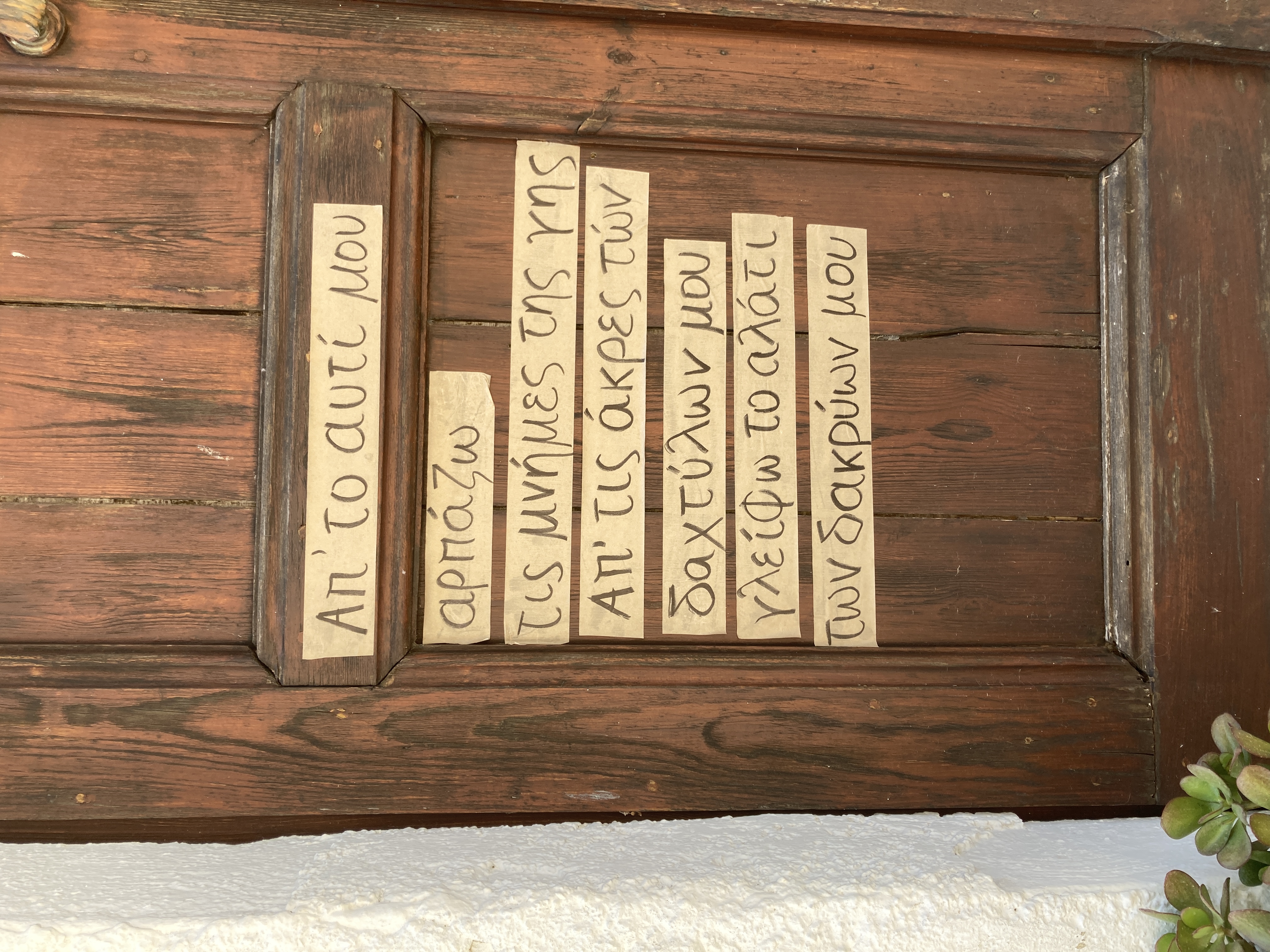
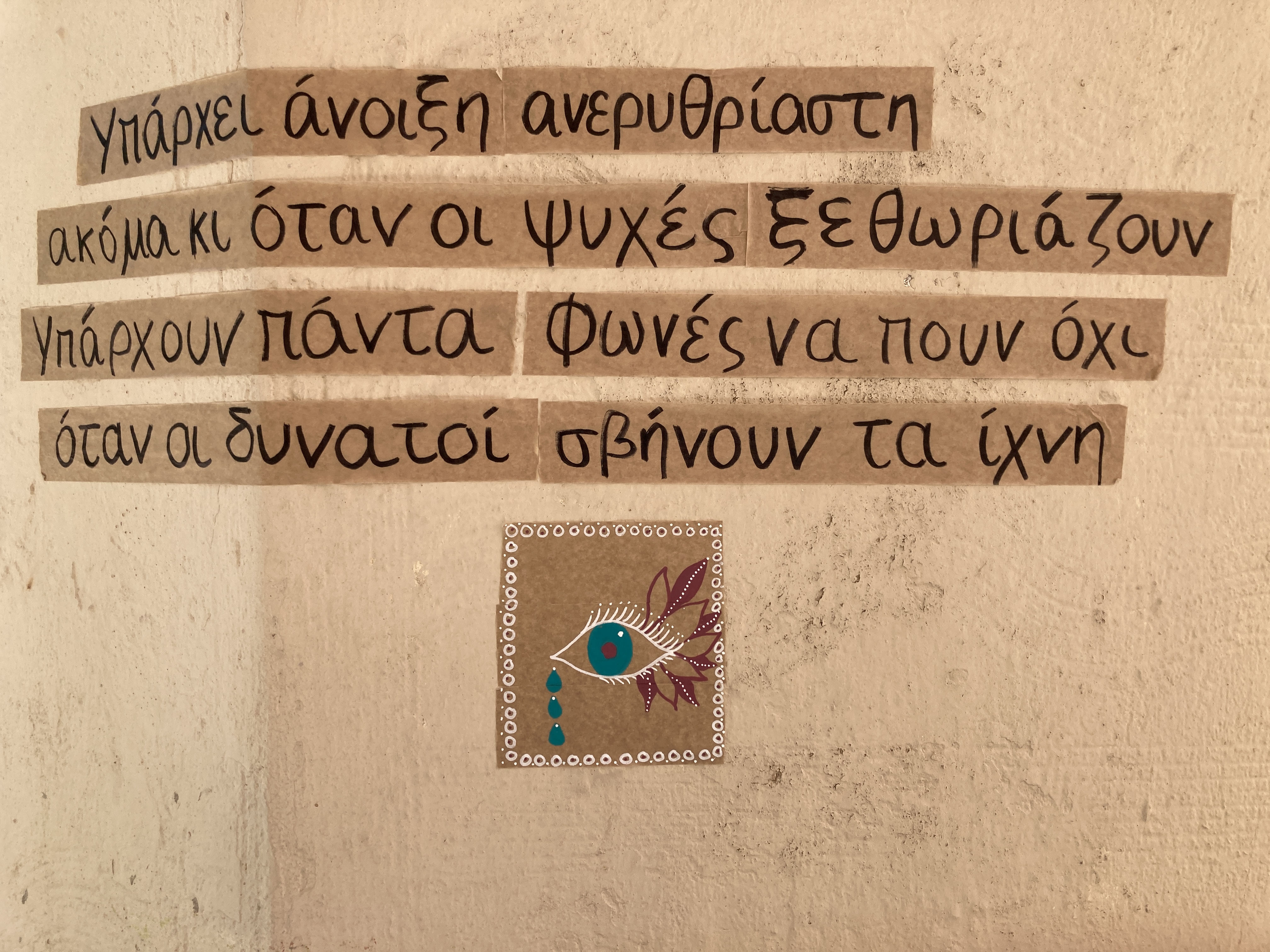
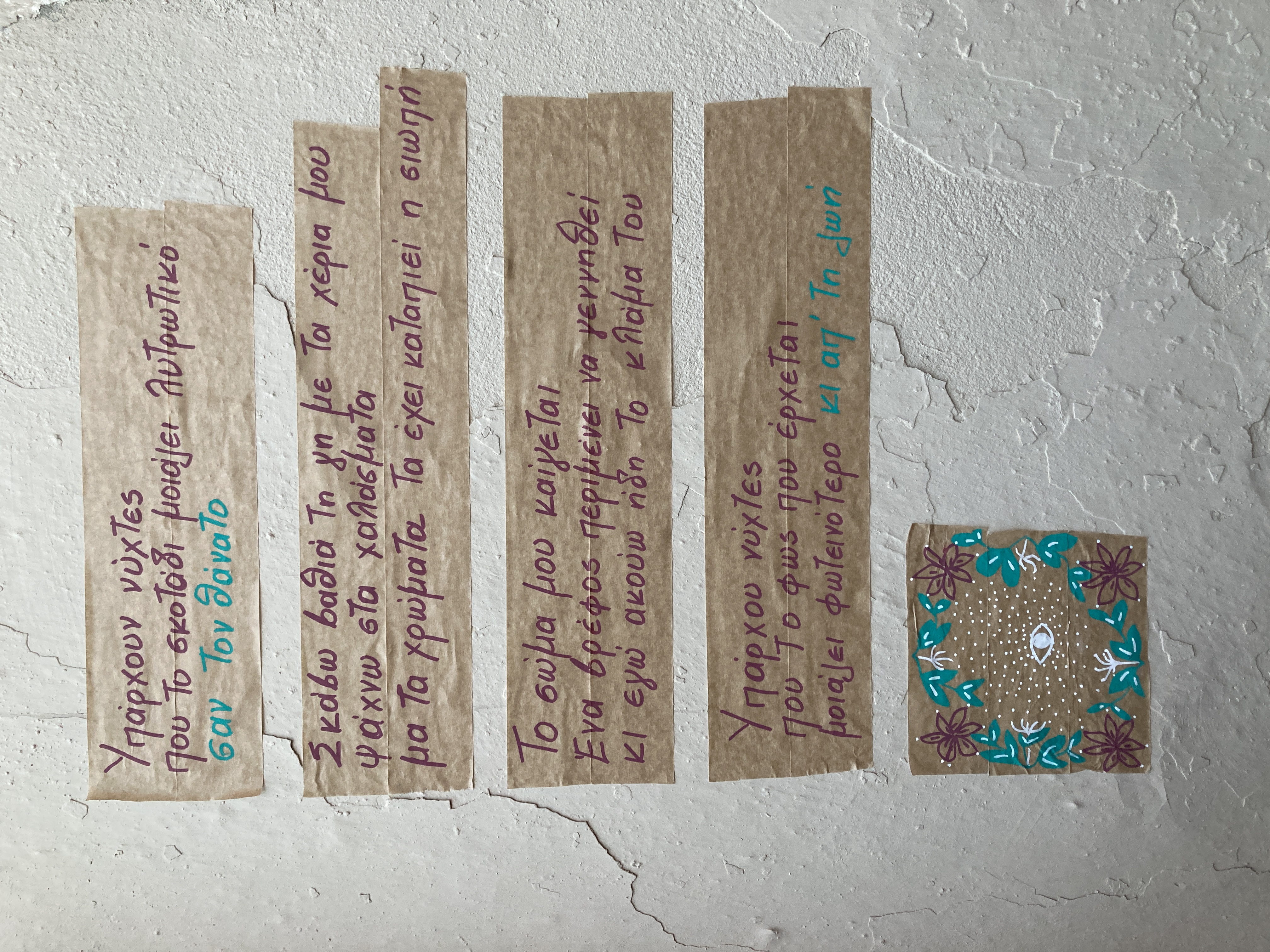
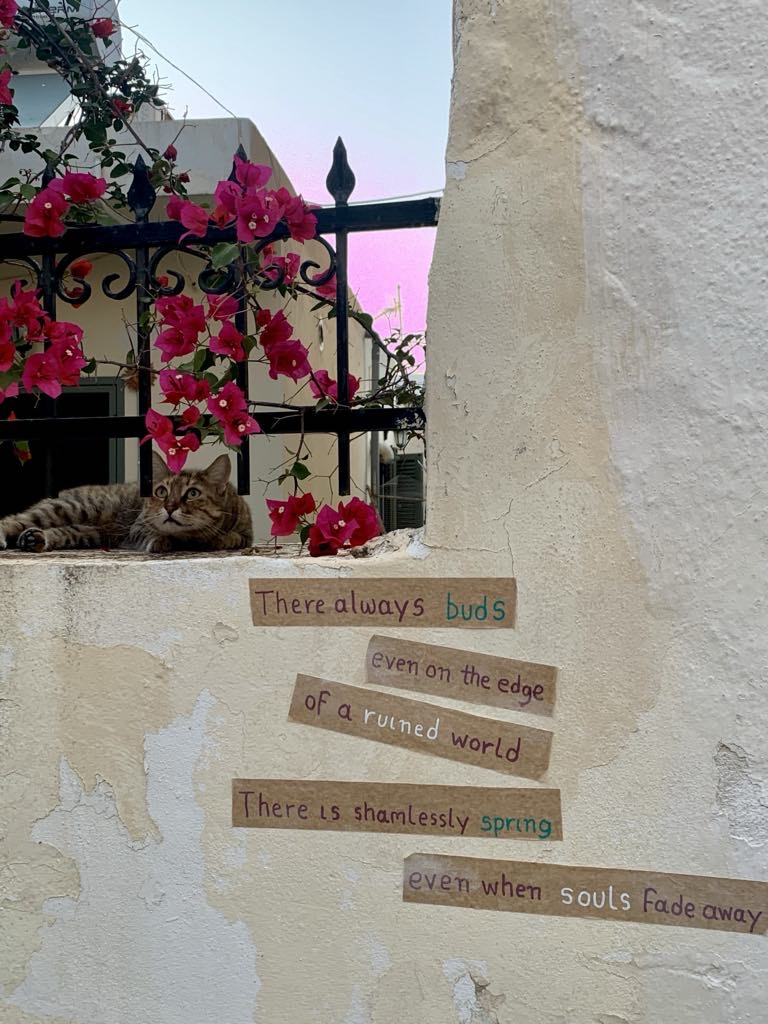
Après le bruit est une installation composée de 17 drapeaux sur lesquels sont reproduits des peintures colorées réalisées à la craie grasse et au crayon de couleur. Elle est accompagnée d’un poème qui se répand dans l’espace public dans plusieurs langues. Le trio musical Pandora’s dream l’accompagne d’un concert composé à partir du poème.
Conçue à partir du besoin de retrait pour mieux s’engager dans le monde, Après le bruit cherche à créer un écrin pour des expériences collectives. Nous avons en effet besoin - peut-être plus que jamais - de cultiver notre capacité collective à nous laisse toucher, sans succomber à la tentation du repli.
Elle a été présentée:
Conçue à partir du besoin de retrait pour mieux s’engager dans le monde, Après le bruit cherche à créer un écrin pour des expériences collectives. Nous avons en effet besoin - peut-être plus que jamais - de cultiver notre capacité collective à nous laisse toucher, sans succomber à la tentation du repli.
Elle a été présentée:
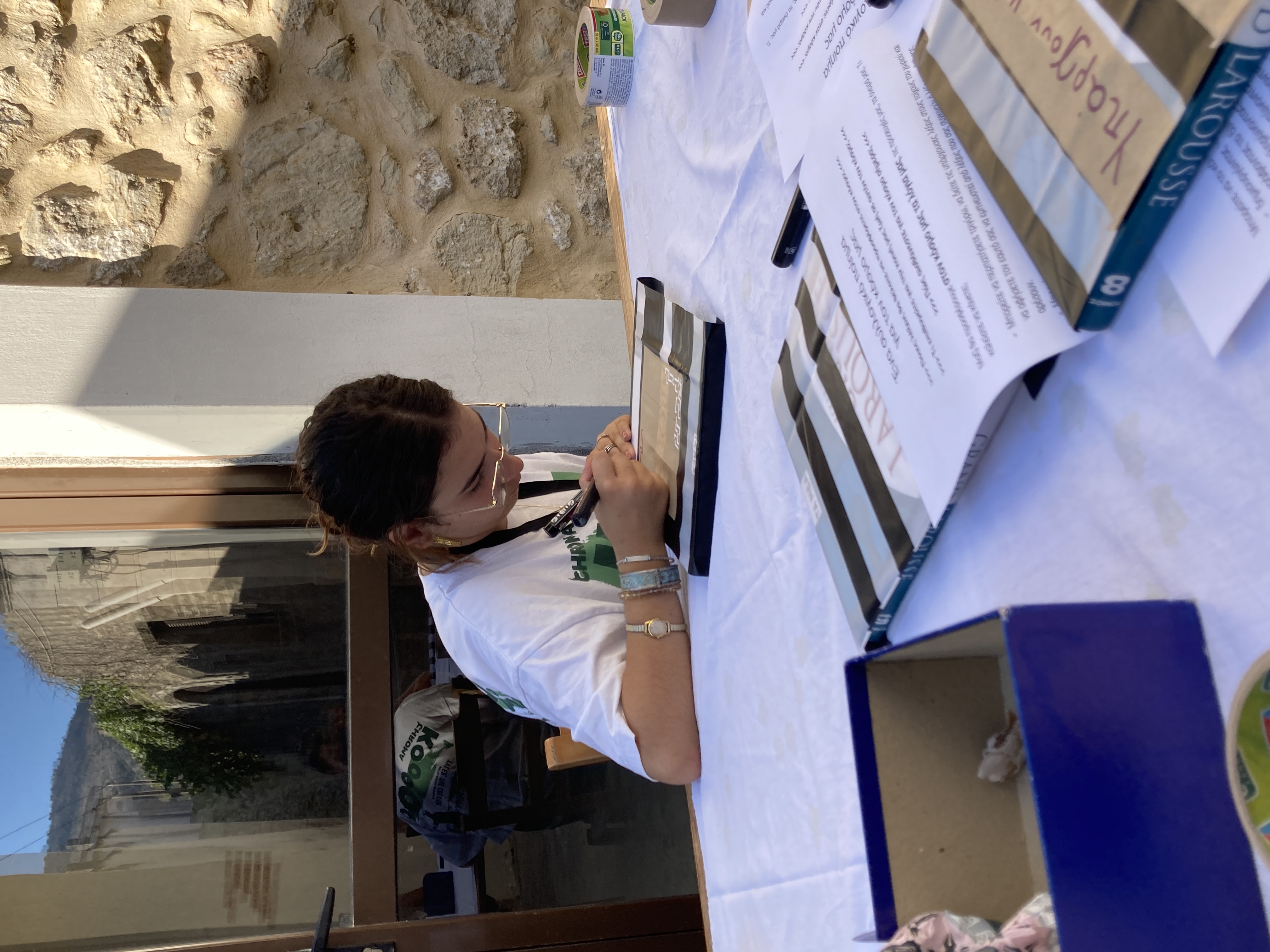
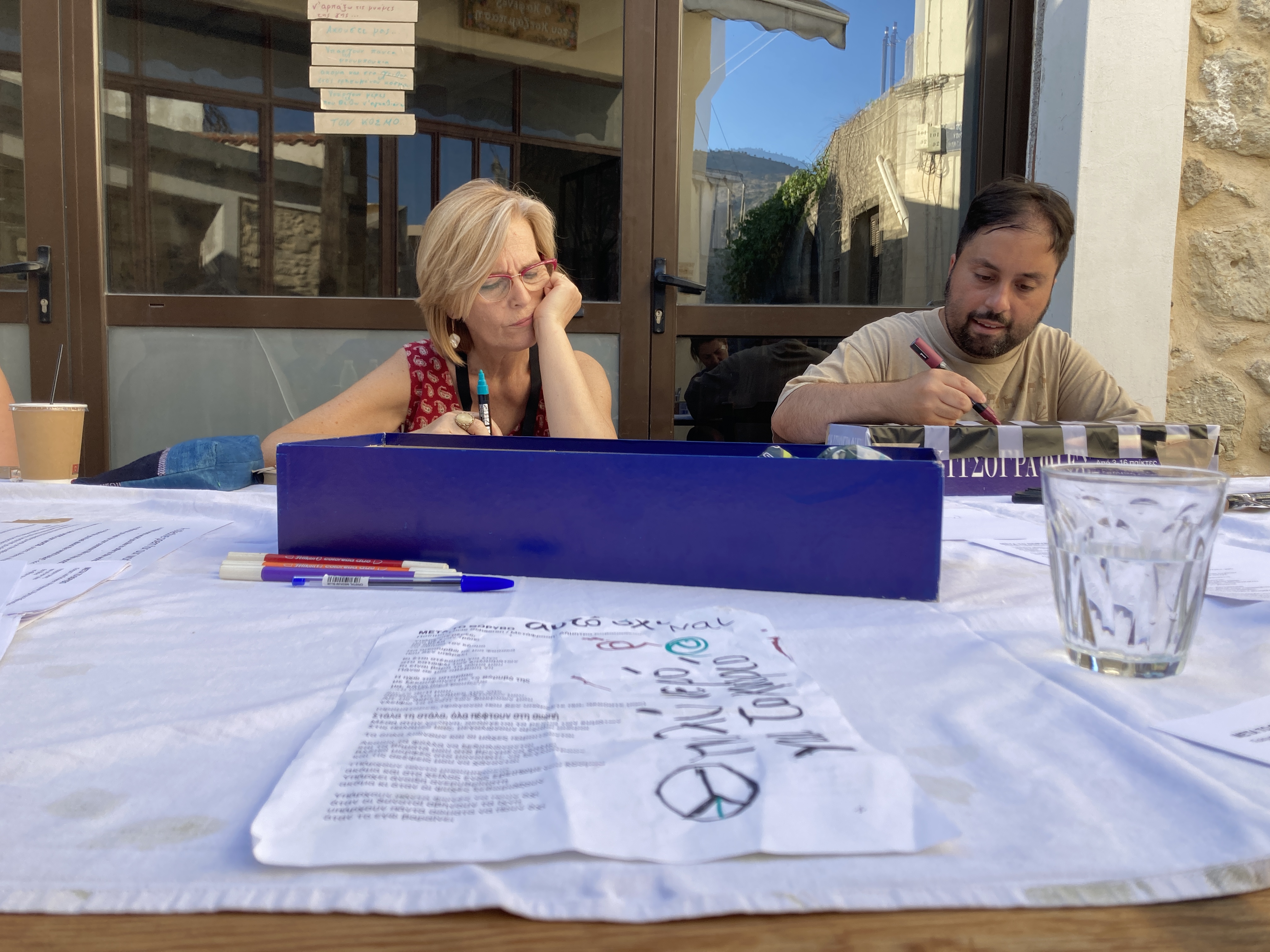
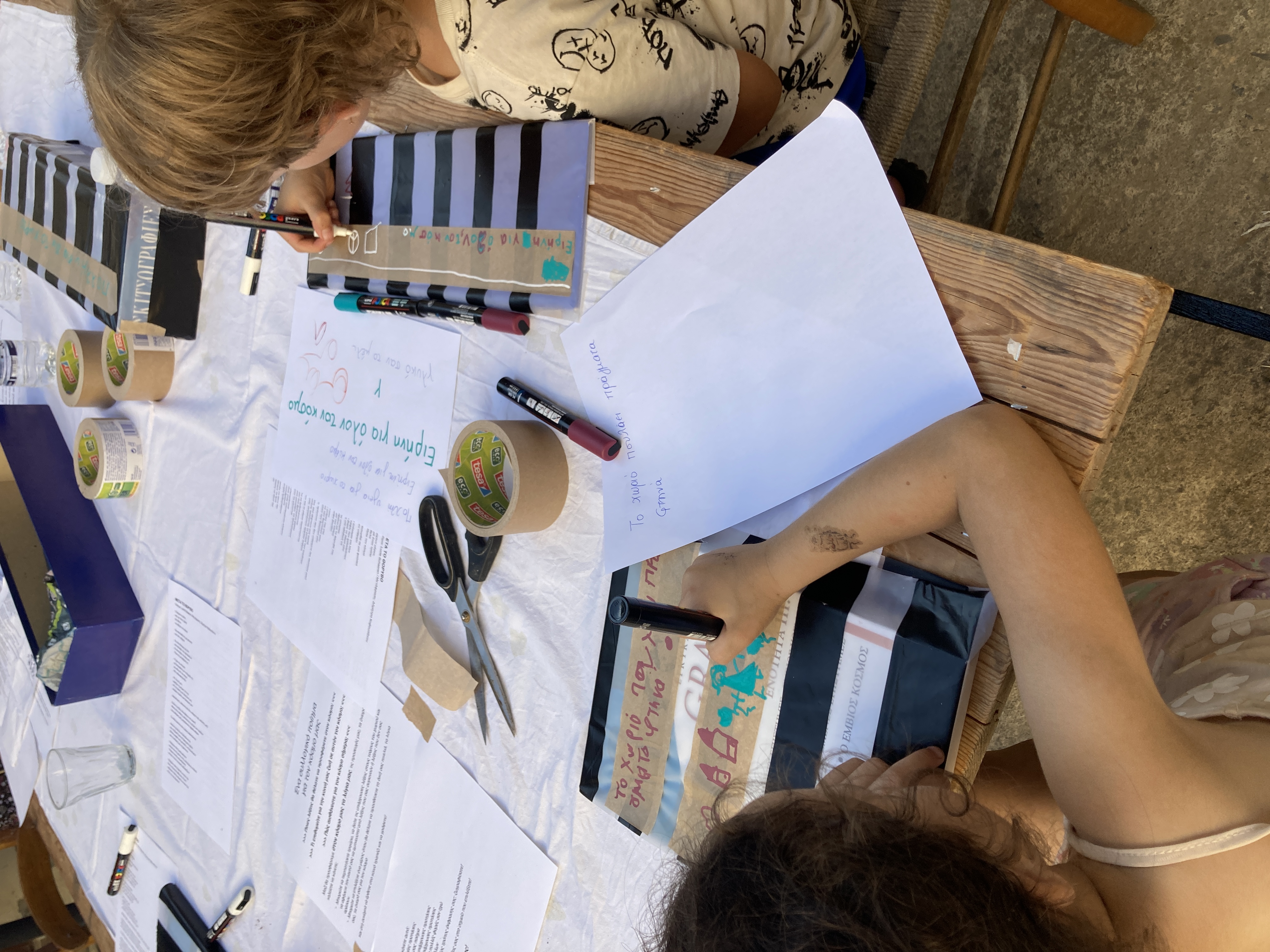
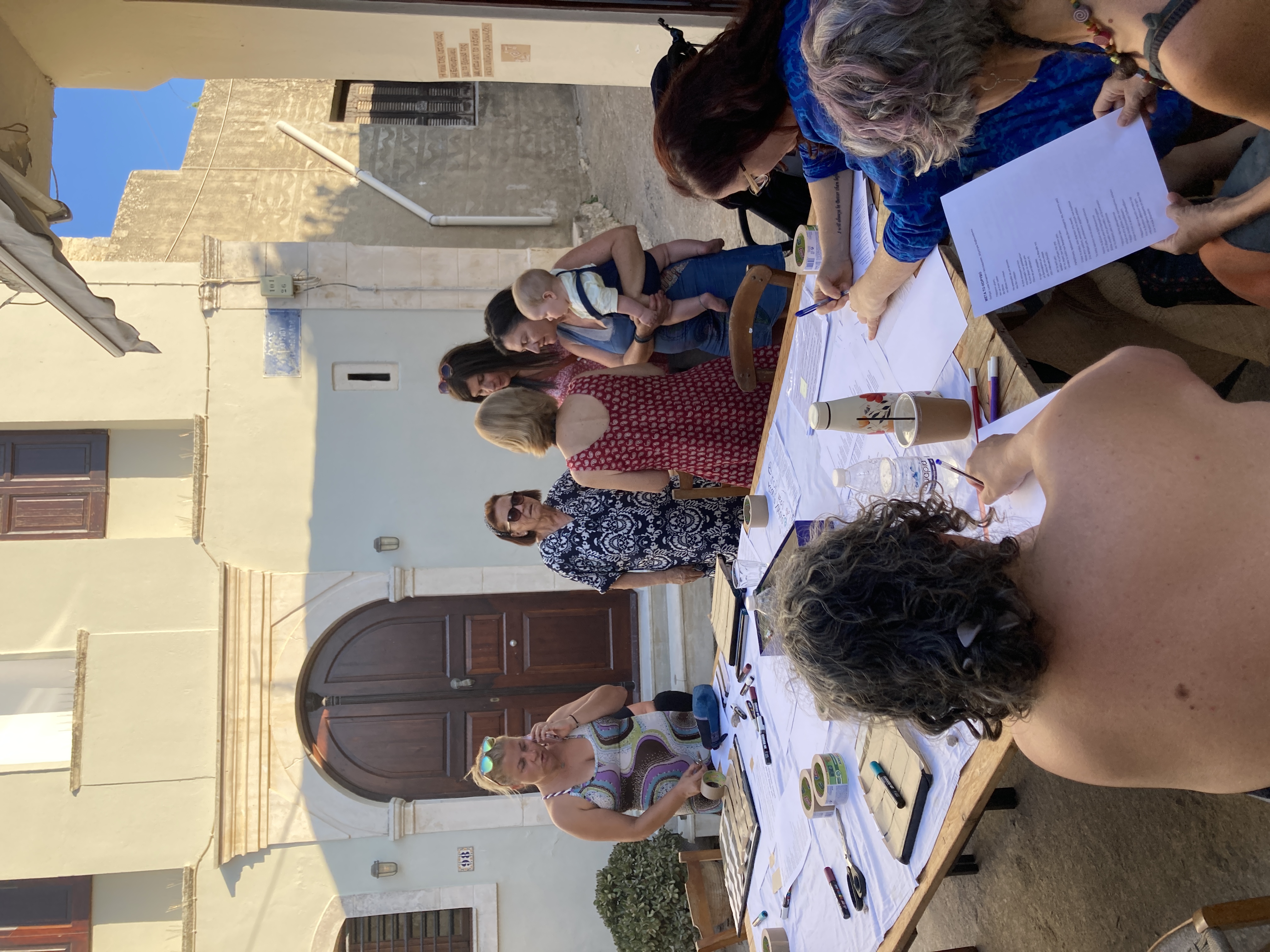
- deux fois en Crète dans le cadre du festival Echoanthos (2024 et 2025) avec déambulation musicale et en 2025, atelier collectif de poésie.
- à Lausanne (2025), dans le cadre du festival Ô Vallon, avec déambulation musicale du groupe musical de l’association Reliefs guidé par Andreas Paragioudakis, un concert du trio Pandora’s dream et la participation de Baran Özer.
Après le bruit (After the Noise) is an installation composed of 17 flags on which colourful paintings made with oil pastels and coloured pencils are reproduced. It comes with a poem that spreads in public space in different languages. The musical trio Pandora’s dream composed a concert program based on the poem.
Designed out of a need to withdraw in order to better engage with the world, Après le bruit seeks to create a setting for collective experiences. We need - maybe more than ever - to cultivate our collective ability to let ourselves be moved, without succumbing to the temptation to withdraw.
It has been presented:
Designed out of a need to withdraw in order to better engage with the world, Après le bruit seeks to create a setting for collective experiences. We need - maybe more than ever - to cultivate our collective ability to let ourselves be moved, without succumbing to the temptation to withdraw.
It has been presented:
- twice in Crete as part of the Echoanthos festival (2024 and 2025) with musical strolls and, in 2025, a collective poetry workshop.
- in Lausanne (2025), as part of the Ô Vallon festival, with musical strolls by the Reliefs association's musical group led by Andreas Paragioudakis, a concert by the Pandora's Dream trio and the participation of Baran Özer.
Atelier collectif in Chromonastiri | Collective workshop in Chromonastiri
Ce projet a reçu le soutien financier des partenaires suivants: la Fondation Théodore Strawinsky, le service de la culture de la Ville de Lausanne, Arts Visuels Vaud.



Cette grande chaîne
Installation extérieure | Outdoor installation2016
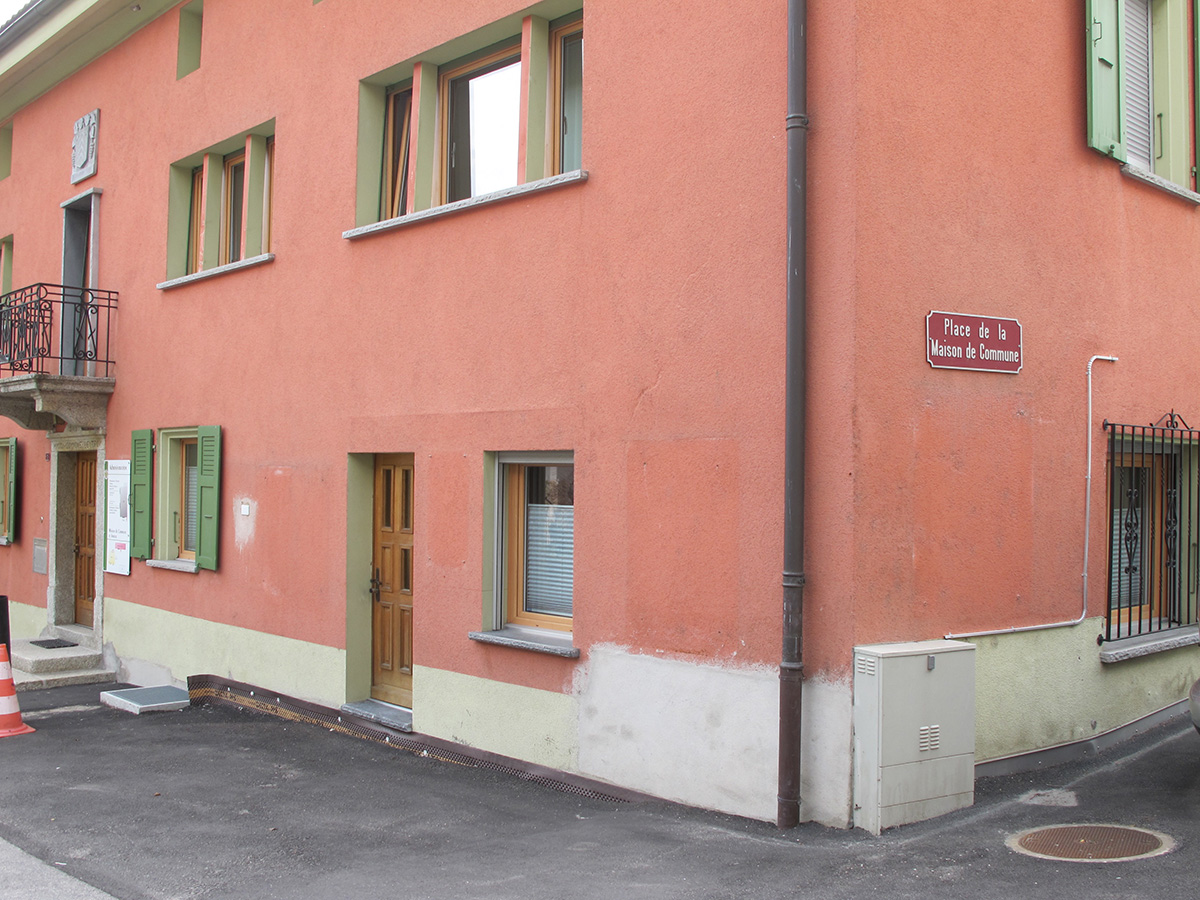


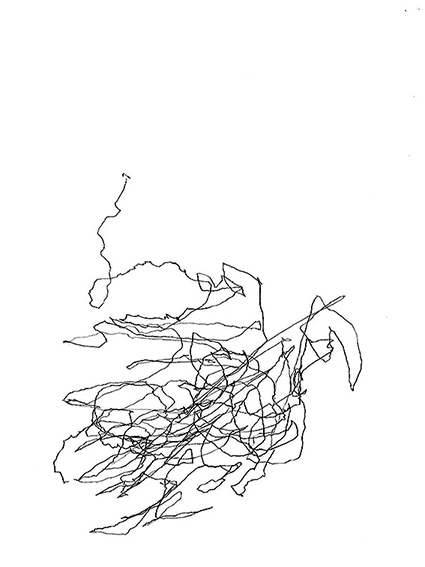
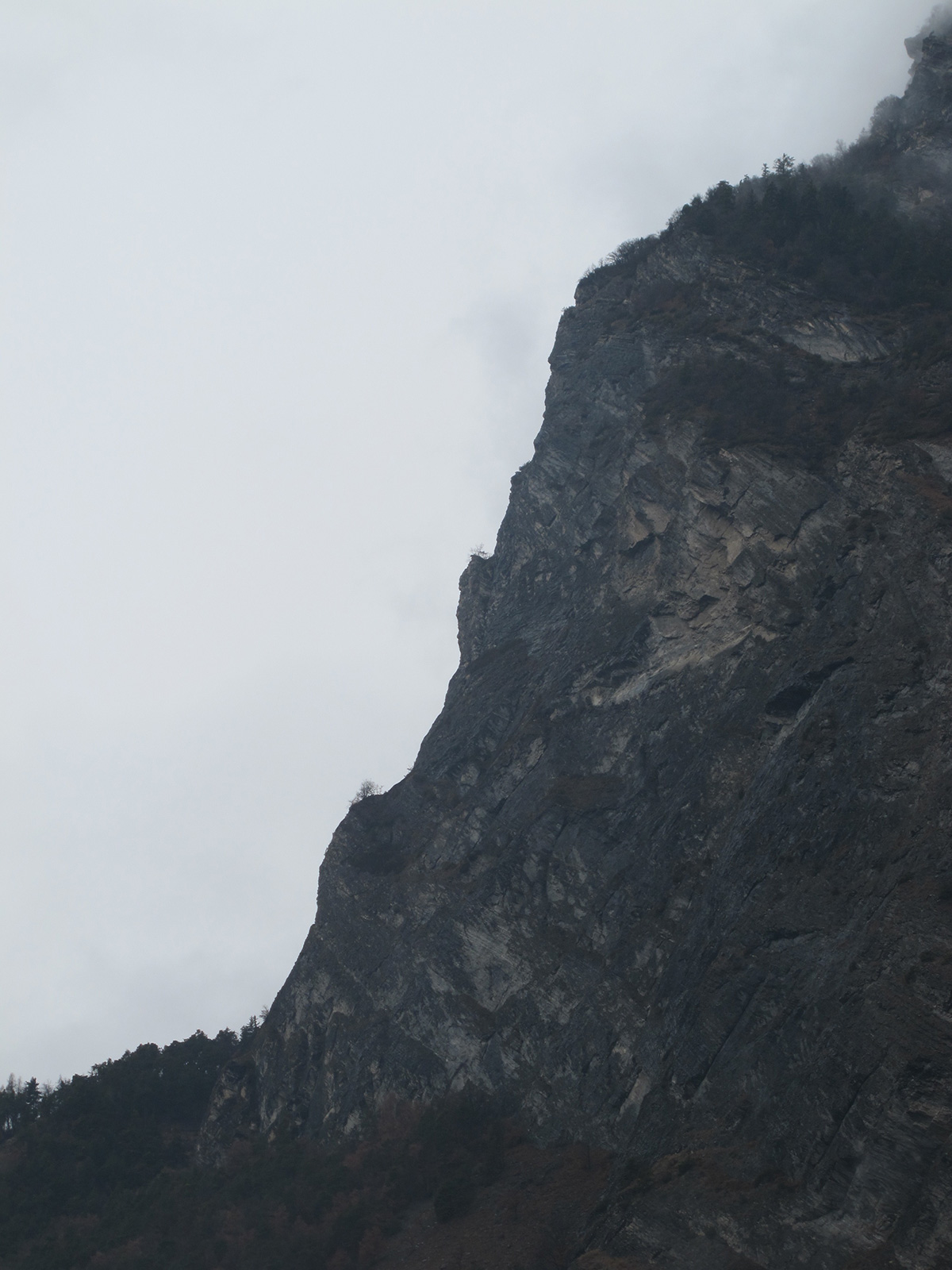
Une grande montagne surplombe le village de Leytron (Valais/Suisse). Derrière, en altitude se trouve un centre d’accueil pour personnes requérant l'asile dans le canton du Valais. Je suis allée à la rencontre des personnes y vivant. Dessiner ensemble a facilité la rencontre.
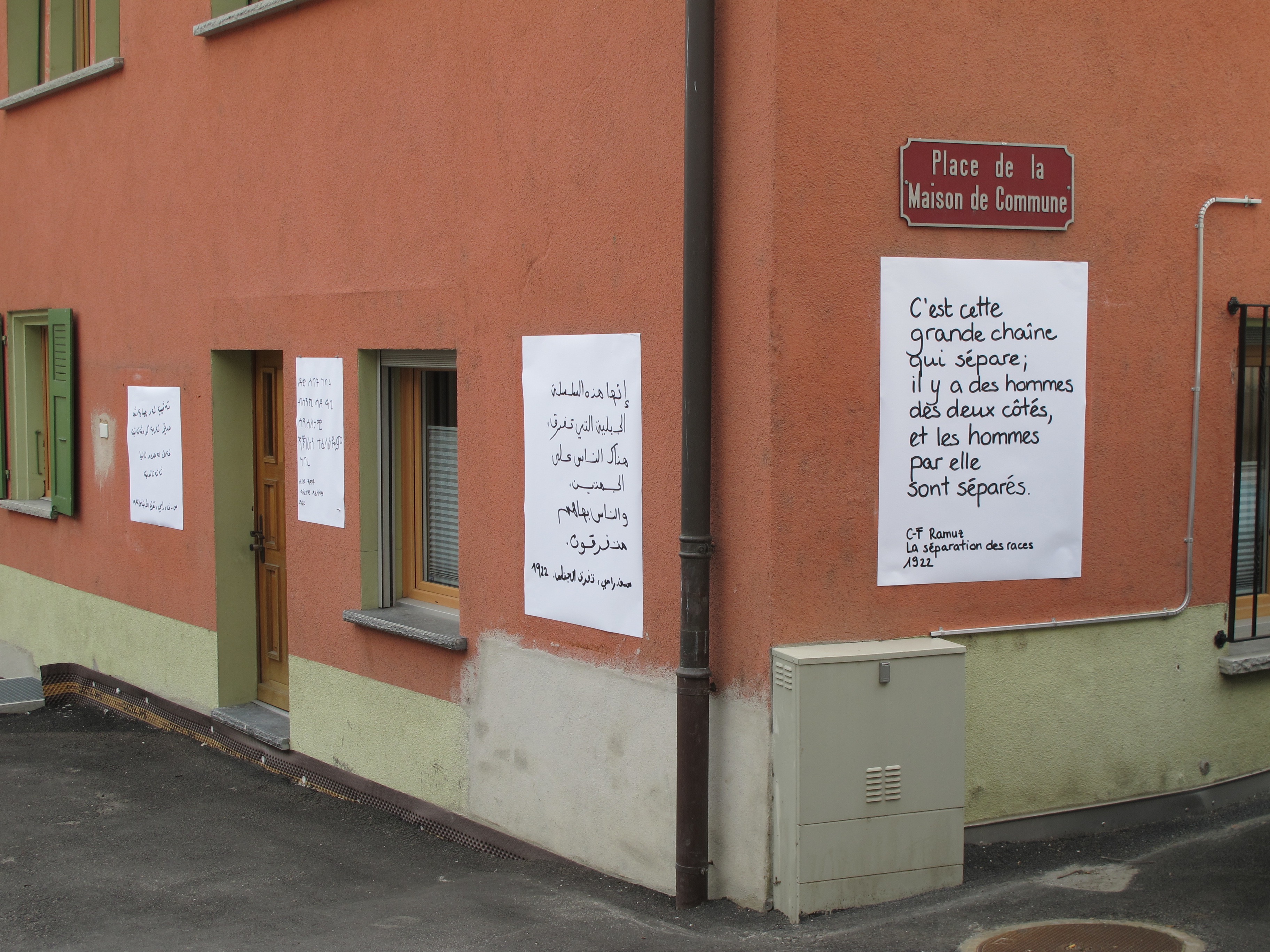
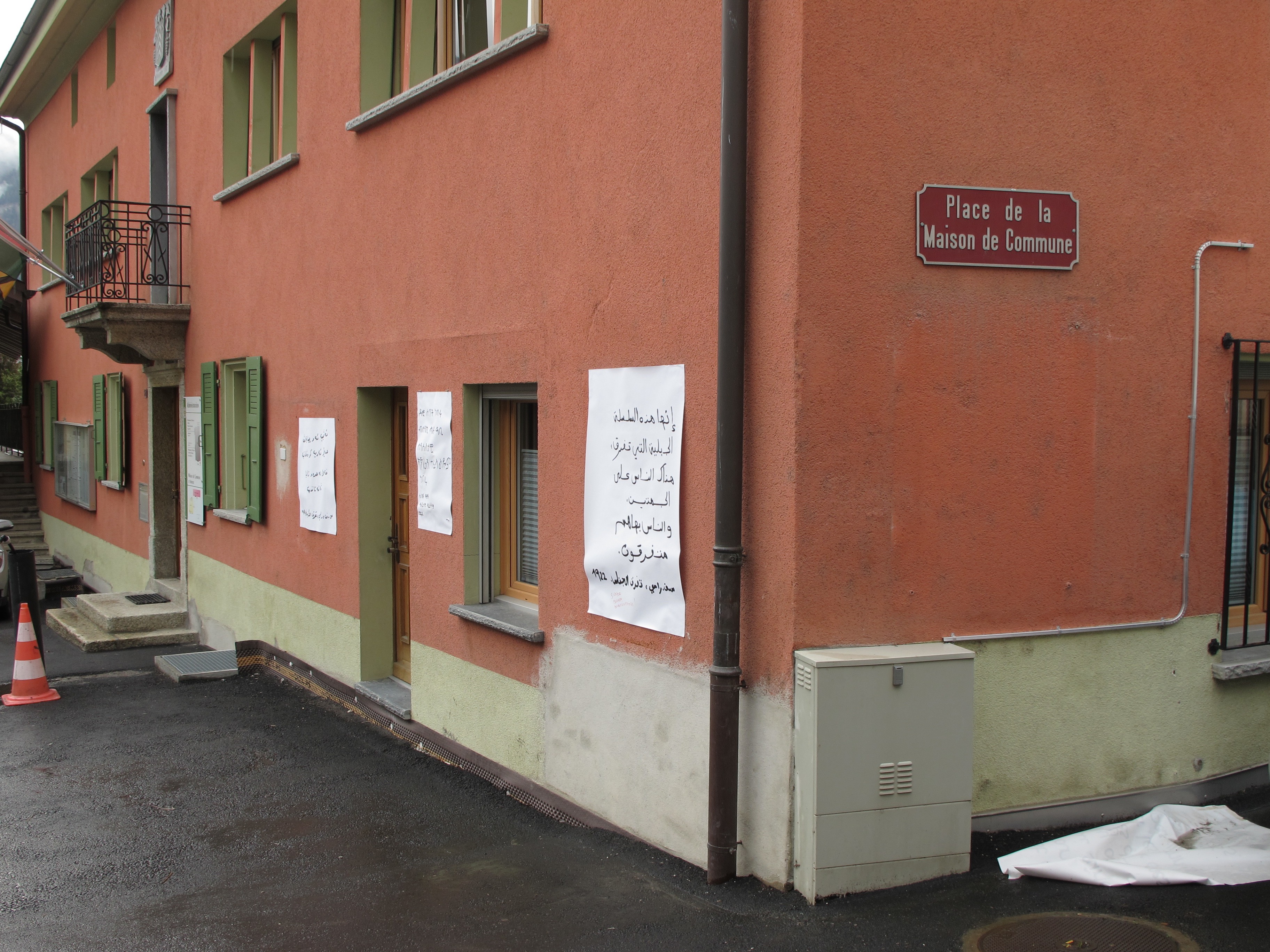
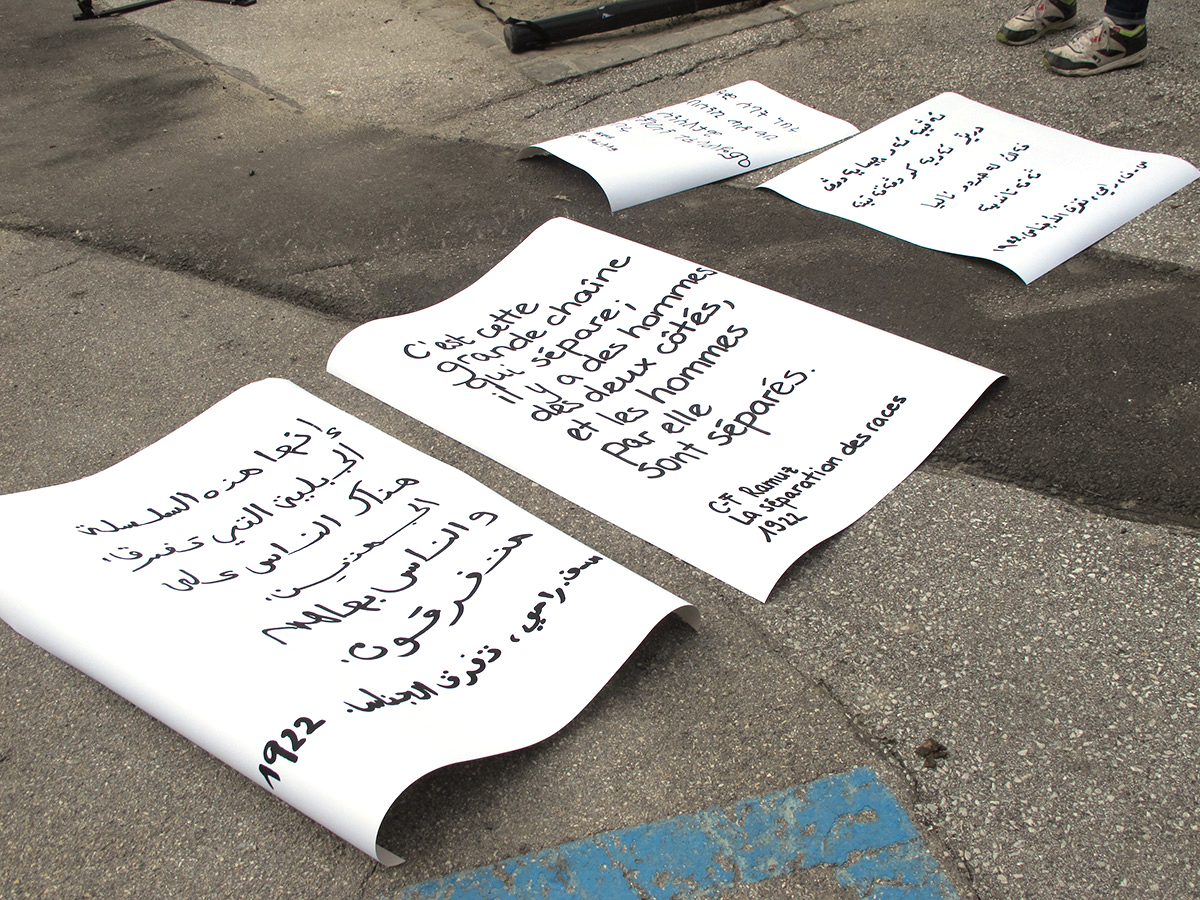
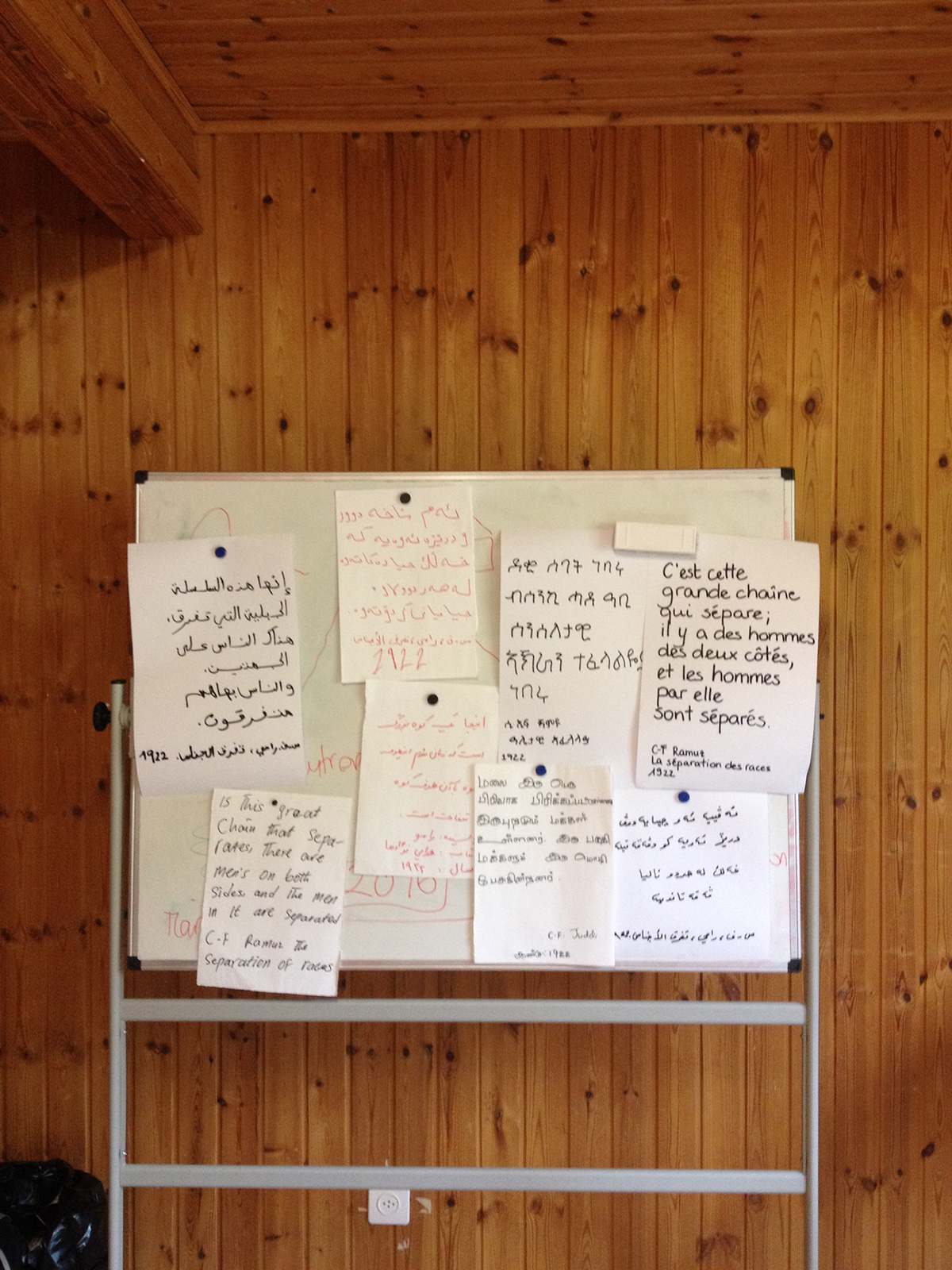
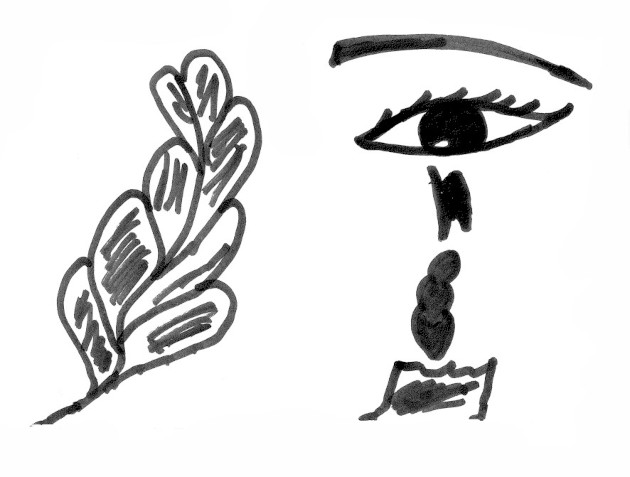
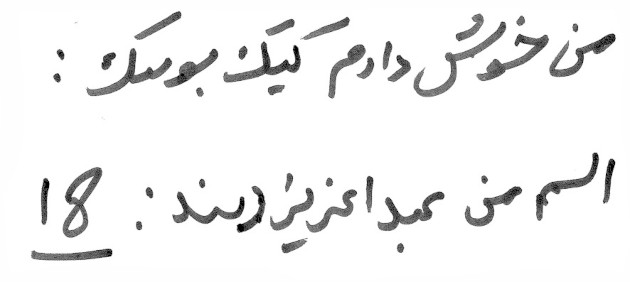
A certain·x·es, j’ai parlé de la phrase de Charles-Ferdinand Ramuz, tirée de son ouvrage “La séparation des races”. Nous l’avons traduite et j'ai installé, de manière éphémère, des affiches sur les traces fantômes des murs de la Maison de Commune de Leytron.
Quelques semaines plus tard j'ai animé deux ateliers de formation de français auprès des habitant·x·es du centre autour du projet, de l'auteur Ramuz et de l'actualité migratoire.
A certain·x·es, j’ai parlé de la phrase de Charles-Ferdinand Ramuz, tirée de son ouvrage “La séparation des races”. Nous l’avons traduite et j'ai installé, de manière éphémère, des affiches sur les traces fantômes des murs de la Maison de Commune de Leytron.
Quelques semaines plus tard j'ai animé deux ateliers de formation de français auprès des habitant·x·es du centre autour du projet, de l'auteur Ramuz et de l'actualité migratoire.
A large mountain looms over the village of Leytron (Valais/Switzerland). Behind it is a reception center for people seeking asylum in the canton of Valais.
I went to meet the people living there. Drawing together helped the encounter.
I told some of them about Charles-Ferdinand Ramuz's phrase from his book "The Separation of Races". We translated it, and I put up posters on the traces of the walls of the Mayor’s house in Leytron.
A few weeks later, I led two French language workshops for local residents, focusing on the project, the author Ramuz and current migration issues.
I went to meet the people living there. Drawing together helped the encounter.
I told some of them about Charles-Ferdinand Ramuz's phrase from his book "The Separation of Races". We translated it, and I put up posters on the traces of the walls of the Mayor’s house in Leytron.
A few weeks later, I led two French language workshops for local residents, focusing on the project, the author Ramuz and current migration issues.
Merci à / Thanks to: l'équipe et les résident·x·es du centre / The team and the residents of the centre in Les Mayens-de-Chamoson, Meron Behre, Ghassun Abdullah, Samira Banny-Sanchis, la Commune de Leytron / the village of Leytron, EDHEA


Voir les projects en lien/ Go to related projects:
- Le Temps de Vivre
- Voies·x de résistance
Quartier des Falaises
Installation extérieure | outdoor installation
2016
2016
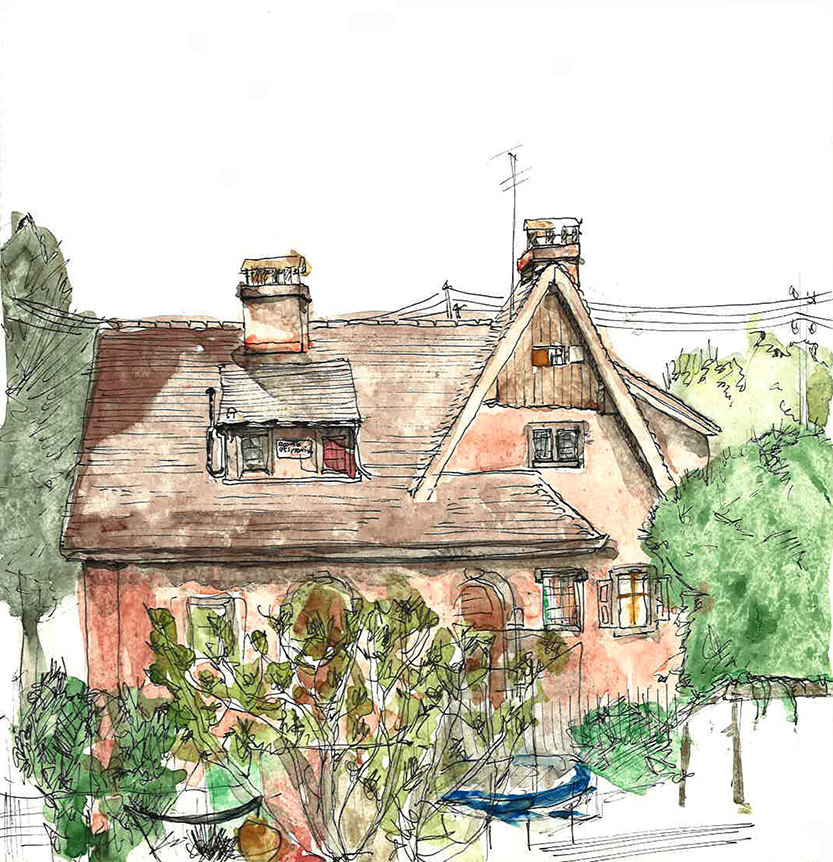

Le village de Chippis (Valais/Suisse) a été construit autour de l’usine AluSuisse, qui a drainé beaucoup de travailleur·x·ses immigré·x·es au début des années 1900.
Je me suis plongée dans le quartier des vieilles maisons ouvrières en les dessinant. Petit à petit, j’ai établi des liens avec certain·x·es habitant·x·es. Nous nous sommes installé·x·es dans leurs jardins pour évoquer l’histoire et le présent, dans un quartier voué à une transformation urbaine imminente.
Les textes reconstruisent nos échanges, mêlant leurs propos à mes impressions. Quelques temps après, je suis allée partager aux habitant·x·es mes textes et j’ai reçu des kilos de tomates en échange.L’installation a été présentée de manière éphémère dans un square desaffecté du quartier, lors de mes études en arts visuels. Ce contexte ne m’a malheureusment pas permis d’organiser un événement avec les habitant·x·es.
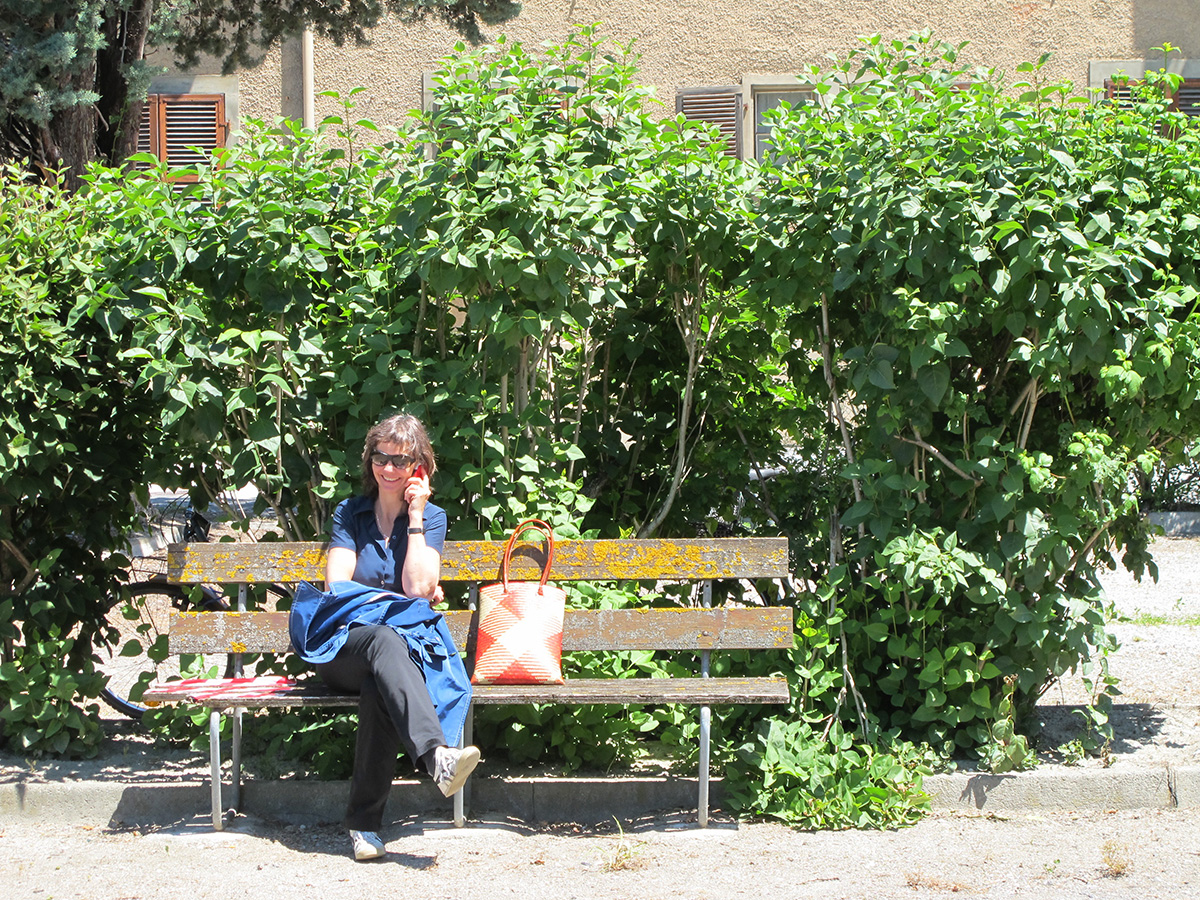
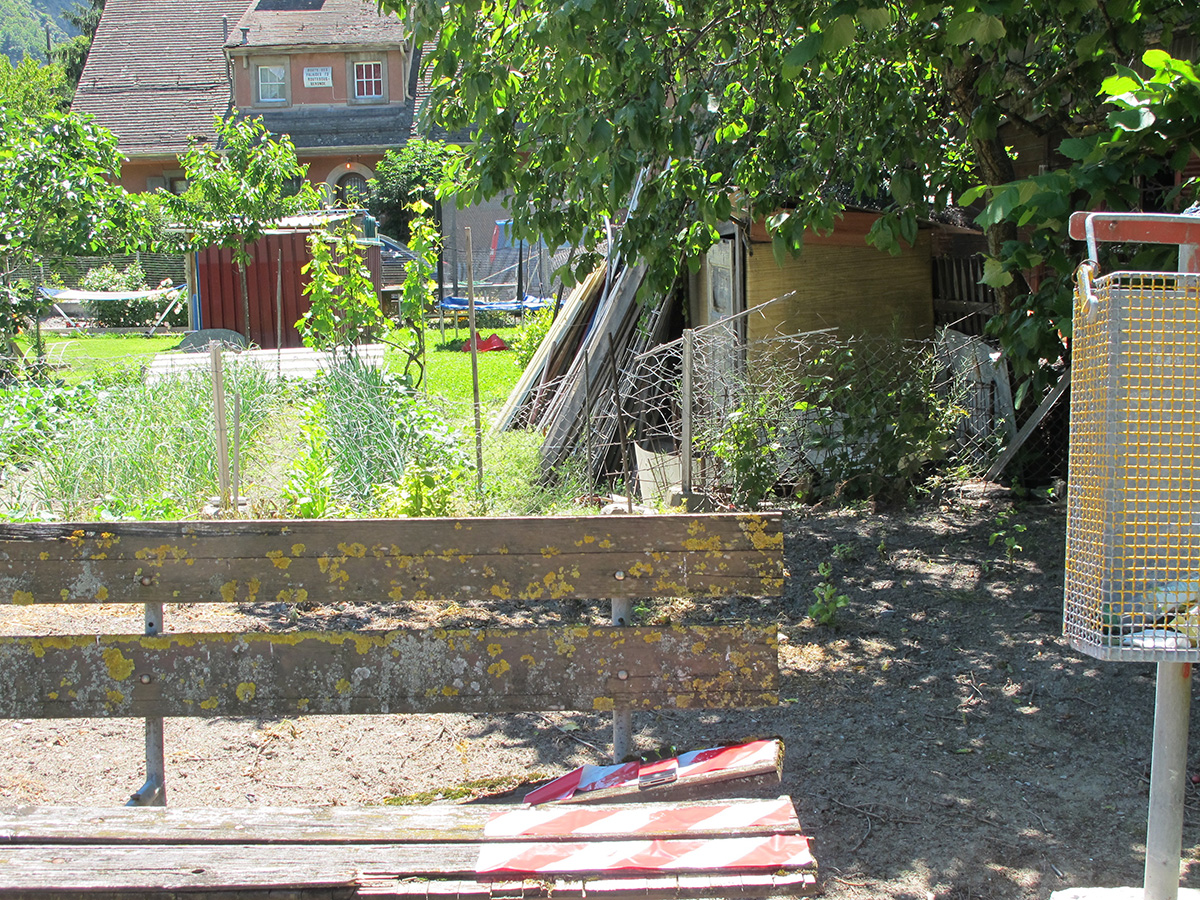
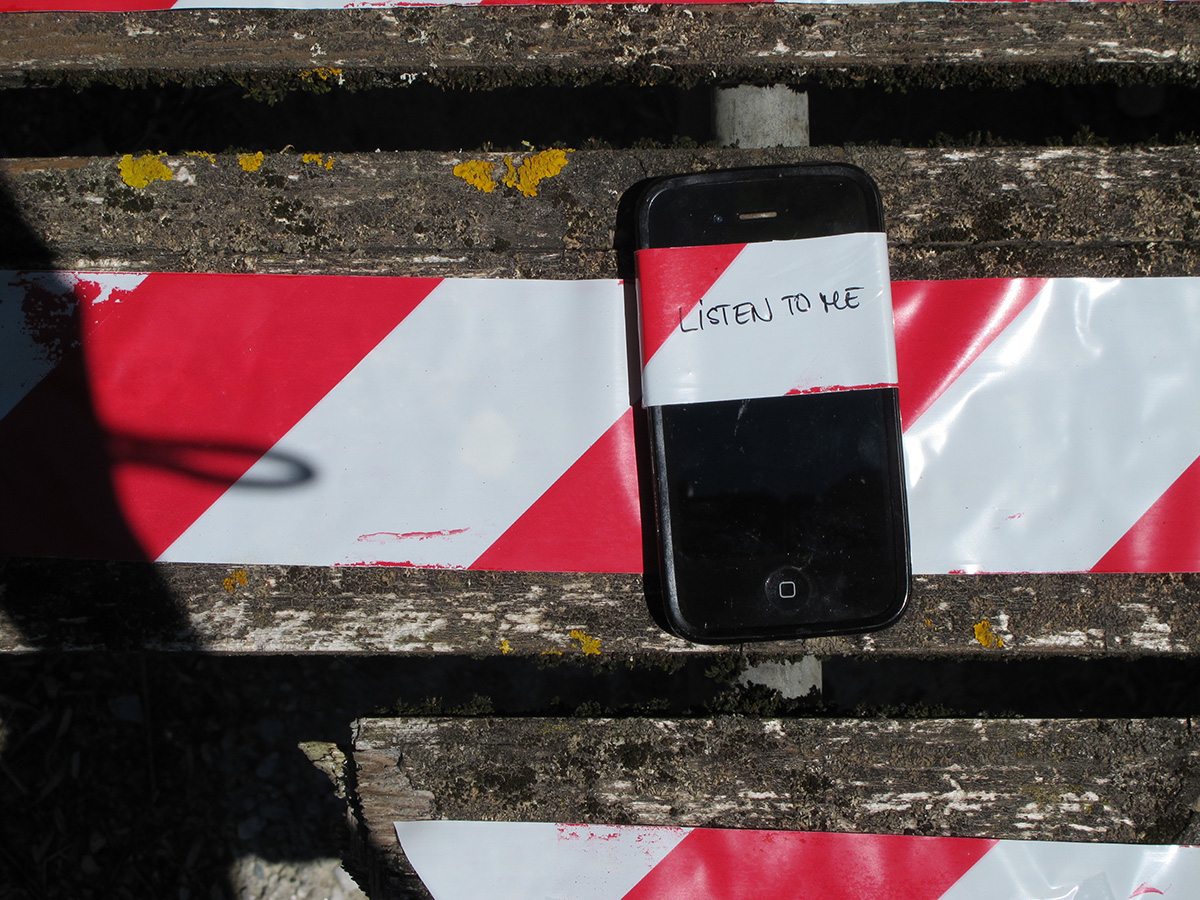
6 smartphones cabossés diffusent un murmure de voix dans un square desaffecté. Lors qu’on s’asseoit sur les bancs et que l’on rapproche le téléphone de l’oreille, on entend les histoires et - indirectement - on rejoue une scène urbaine largement visible aujourd’hui.
Je me suis plongée dans le quartier des vieilles maisons ouvrières en les dessinant. Petit à petit, j’ai établi des liens avec certain·x·es habitant·x·es. Nous nous sommes installé·x·es dans leurs jardins pour évoquer l’histoire et le présent, dans un quartier voué à une transformation urbaine imminente.
Les textes reconstruisent nos échanges, mêlant leurs propos à mes impressions. Quelques temps après, je suis allée partager aux habitant·x·es mes textes et j’ai reçu des kilos de tomates en échange.L’installation a été présentée de manière éphémère dans un square desaffecté du quartier, lors de mes études en arts visuels. Ce contexte ne m’a malheureusment pas permis d’organiser un événement avec les habitant·x·es.
6 smartphones cabossés diffusent un murmure de voix dans un square desaffecté. Lors qu’on s’asseoit sur les bancs et que l’on rapproche le téléphone de l’oreille, on entend les histoires et - indirectement - on rejoue une scène urbaine largement visible aujourd’hui.
The village of Chippis (Wallis/Switzerland) was built around the AluSuisse factory, which attracted many immigrant workers in the early 1900s. I immersed myself in the old workers’ houses neighborhood by drawing them. Step by step, I encountered some of the residents. We sat down in their lush gardens to talk about history and the present, in a neighborhood slated for imminent urban transformation.
The texts reconstruct our exchanges, blending their words with my impressions. Some time later, I went to share my texts with the residents and received kilos of tomatoes in exchange.
The installation was presented for a short time in a disused square in the neighborhood, during my studies in visual arts. Unfortunately, this context didn't allow me to organize an event with the residents.
6 battered smartphones broadcast a murmur of voices in a disused square. As you sit on the benches and bring the phone up to your ear, you hear the stories and - indirectly - re-enact an urban scene that is widely visible today.
The texts reconstruct our exchanges, blending their words with my impressions. Some time later, I went to share my texts with the residents and received kilos of tomatoes in exchange.
The installation was presented for a short time in a disused square in the neighborhood, during my studies in visual arts. Unfortunately, this context didn't allow me to organize an event with the residents.
6 battered smartphones broadcast a murmur of voices in a disused square. As you sit on the benches and bring the phone up to your ear, you hear the stories and - indirectly - re-enact an urban scene that is widely visible today.
Merci à / Thanks to : Joseph, Fernanda, Guerrino, Nino, Fulvia, Thomas, Manon, Virginie, Georg, Sarah, Delphine, Hy-Vong, Christian et/and EDHEA
Voix/Voice : Loredana von Allmen
Le temps d’une mue
Installation pour une exposition collective | Installation for a collective exhibition2019

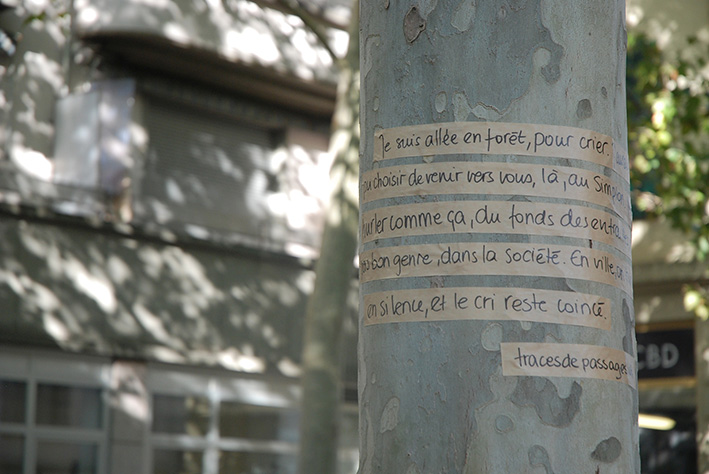
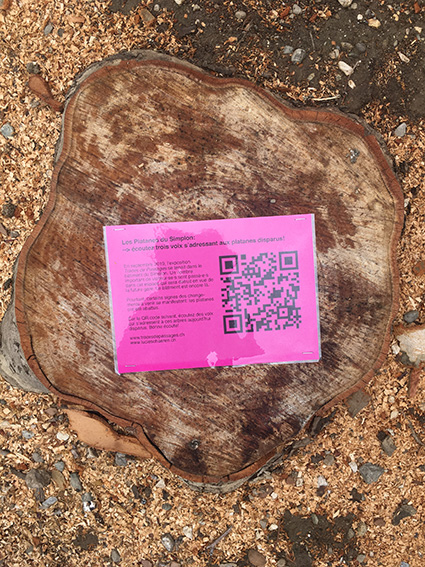


Une voix humaine s’adresse à des arbres plantés sur une place qui sera modifiée pour construire une nouvelle gare. Ils sont les témoins du passage des gens, du temps et de la transformation de la ville. Quelle force leur permet de garder cette posture puissante, debout? Comment peut-on, nous, êtres humains, croître paisiblement en ville?
Installation intérieure et extérieure pour l'exposition collective tracesdepassages.ch, réalisée dans le bâtiment de la Rue du Simplon à Lausanne avant sa destruction. Un an plus, intervention extérieure lors de l’abattage des arbres. L'installation a été l'hôte d'un concert d‘Andreas Paragioudakis et de Christos Stertsos.
Avec les voix de Solange Schifferdecker et Loredana von Allmen
Installation intérieure et extérieure pour l'exposition collective tracesdepassages.ch, réalisée dans le bâtiment de la Rue du Simplon à Lausanne avant sa destruction. Un an plus, intervention extérieure lors de l’abattage des arbres. L'installation a été l'hôte d'un concert d‘Andreas Paragioudakis et de Christos Stertsos.
Avec les voix de Solange Schifferdecker et Loredana von Allmen
A human voice speaks to trees planted in a square that will be altered to build a new station. They bear witness to the passage of people, time and the transformation of the city. What strength enables them to maintain this powerful, upright posture? How can we, as human beings, grow peacefully in the city?
Interior and exterior installation for the collective exhibition tracesdepassages.ch, created in the Rue du Simplon building in Lausanne before it was demolished. One year later, outdoor intervention during tree felling. The installation hosted a concert by Andreas Paragioudakis and Christos Stertsos.With the voices of Solange Schifferdecker and Loredana von Allmen
Interior and exterior installation for the collective exhibition tracesdepassages.ch, created in the Rue du Simplon building in Lausanne before it was demolished. One year later, outdoor intervention during tree felling. The installation hosted a concert by Andreas Paragioudakis and Christos Stertsos.With the voices of Solange Schifferdecker and Loredana von Allmen
Trait d’Union
Installation | Installation2017



Le titre, Trait-d’Union, vient d’un poème de Miljenko Jergović, intitulé La Linea. Dans ce poème, il évoque la sensation de n’appartenir ni à un côté, ni à l’autre. C’est ce sentiment que j’explore avec cette installation à une époque où je passais beaucoup de temps dans les Balkans. Probablement à la recherche de Valentina, une petite fille de 8 ans qui est arrivée dans ma classe en Suisse lors des guerres des annés 90.
Pour cette installation, j’ai rencontré cinq femmes vivant en Suisse et ayant un lien avec la région de l'ex-Yougoslavie et, ensemble, nous questionnons la notion d’appartenance. Aussi longtemps que je me souvienne, moi aussi, je sens une appartenance multiple, bien que je n’aie vécu ni guerre ni migration.
Les textes combinent l’approche sociologique et artistique. Il en résulte un flot continu de réflexions dans lequel chacun·e est invité·e à prendre ce qu’iel veut, où iel veut, comme iel veut.
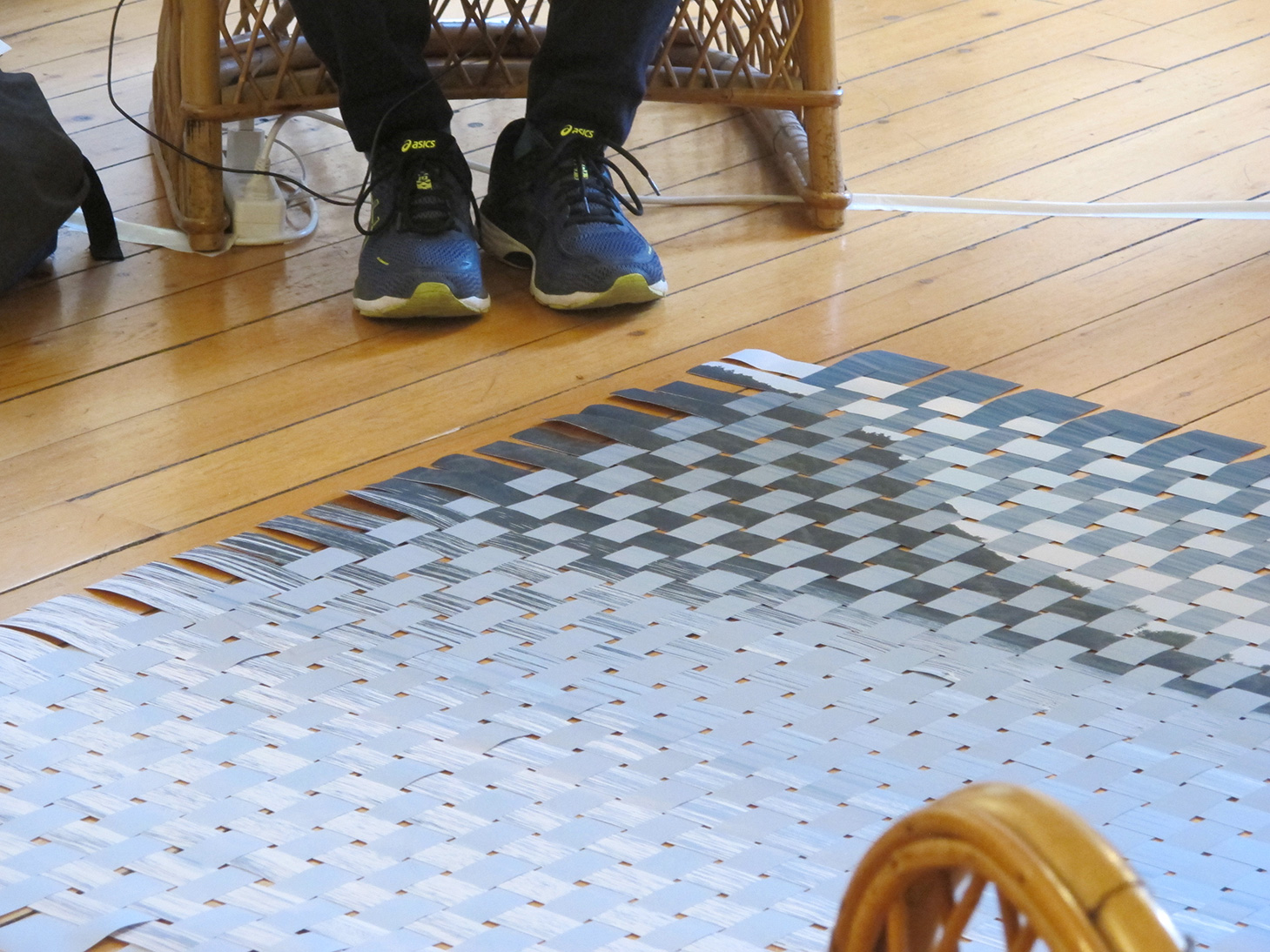
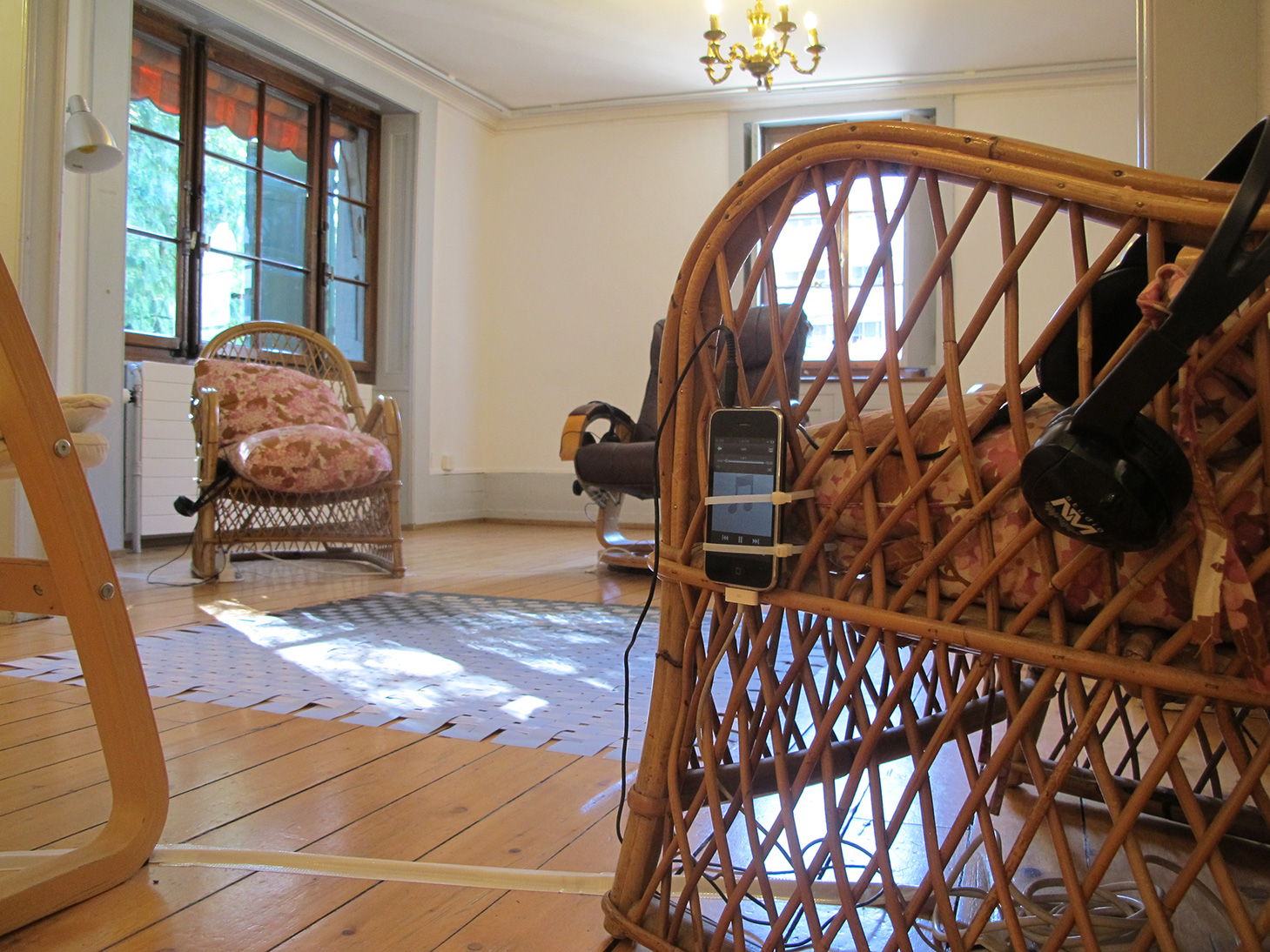
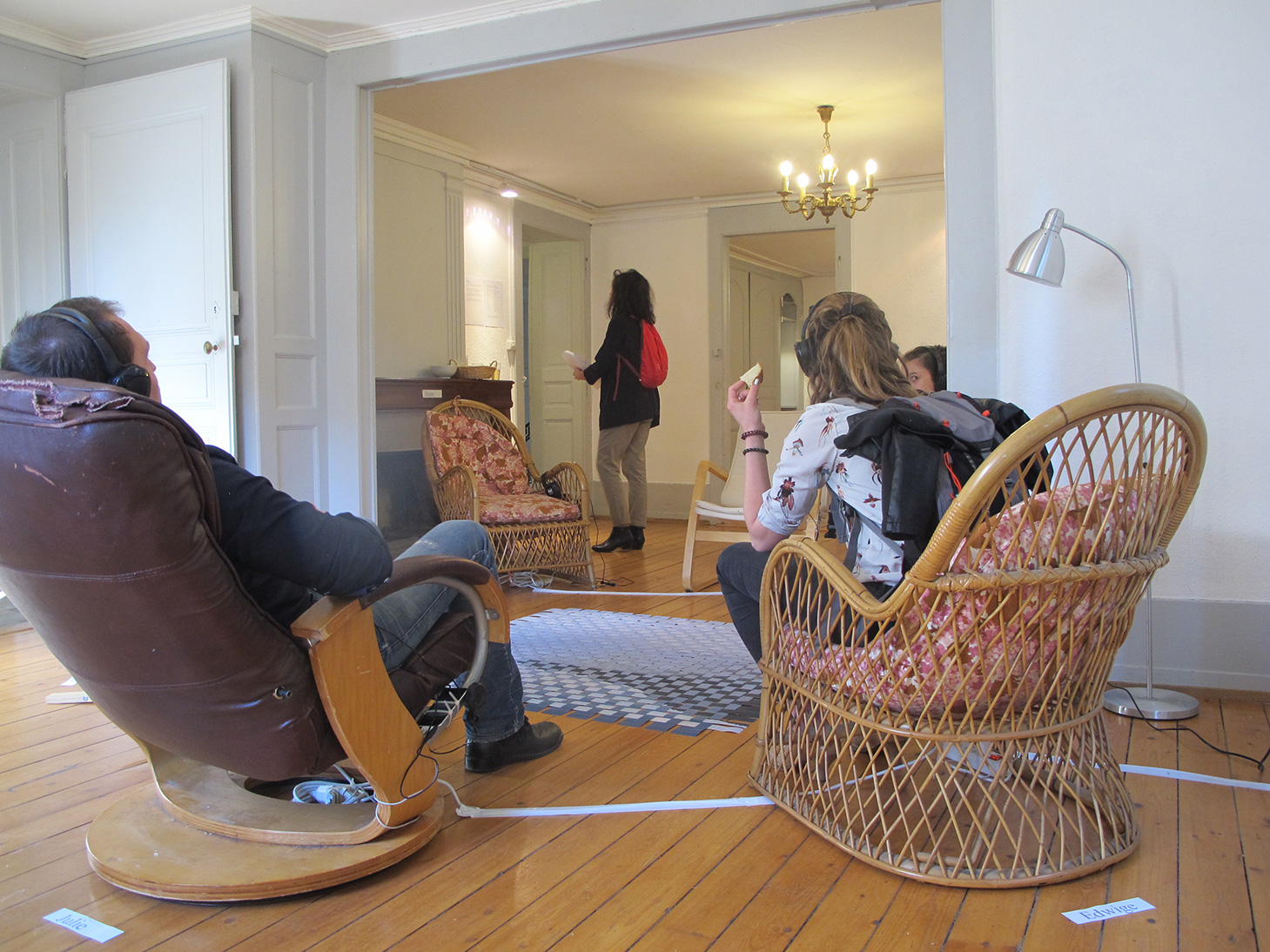
5 fauteuils sont installés en cercle autour d’un tapis de papier, tissant deux eaux: le lac Léman et la rivière Sava.
Pour cette installation, j’ai rencontré cinq femmes vivant en Suisse et ayant un lien avec la région de l'ex-Yougoslavie et, ensemble, nous questionnons la notion d’appartenance. Aussi longtemps que je me souvienne, moi aussi, je sens une appartenance multiple, bien que je n’aie vécu ni guerre ni migration.
Les textes combinent l’approche sociologique et artistique. Il en résulte un flot continu de réflexions dans lequel chacun·e est invité·e à prendre ce qu’iel veut, où iel veut, comme iel veut.
5 fauteuils sont installés en cercle autour d’un tapis de papier, tissant deux eaux: le lac Léman et la rivière Sava.
The title, Trait-d'Union (Hyphen), stems from a poem by Miljenko Jergović, La Linea. In this poem he evokes the sensation of belonging to neither side. It is this feeling that I explore with this installation in a period where I spent a lot of time in the Balkans. Probably searching for Valentina, an 8 years old girl who came in my class in Switzerland during the wars of the 90’s.
For this installation, I met five women living in Switzerland who have a link with the region of ex-Yugoslavia and together we question the notion of belonging. Since I can remember, I, too, have a multiple belonging allthough I didn’t experience any war or migration.
The texts written combine sociological and artistic tools. A continuous flow of reflections results in which the listener is invited to take whatever he/she wants, whereever he/she wants, however he/she wants.
5 seats are installes in a circle around a paper carpet, weaving two waters: the Geneva lake and the Sava river.
For this installation, I met five women living in Switzerland who have a link with the region of ex-Yugoslavia and together we question the notion of belonging. Since I can remember, I, too, have a multiple belonging allthough I didn’t experience any war or migration.
The texts written combine sociological and artistic tools. A continuous flow of reflections results in which the listener is invited to take whatever he/she wants, whereever he/she wants, however he/she wants.
5 seats are installes in a circle around a paper carpet, weaving two waters: the Geneva lake and the Sava river.

